
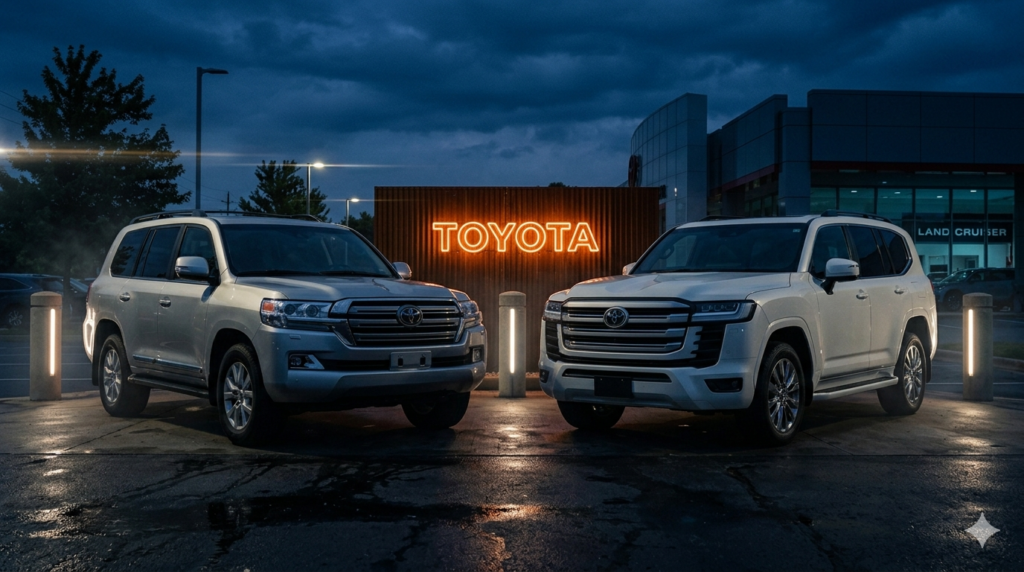
Few badges evoke the same sense of bulletproof, go-anywhere authority as the Toyota Land Cruiser. For nearly fourteen years, the 200 Series stood as the undisputed king of the overland world—a heavy-duty fortress on wheels that favored brute force and old-school reliability.
When Toyota rolled out the 300 Series, it didn’t just turn a page; it rewrote the playbook. Built on the modern TNGA-F global architecture, the 300 Series sheds weight, embraces high-tech intelligence, and steps into the luxury spotlight.
But does newer automatically mean better? Let’s pit the legendary Land Cruiser 200 against the cutting-edge Land Cruiser 300 to see how this generational shift alters the DNA of an icon.
Engine Specs: The Battle of the V8 King vs. High-Tech V6
The most controversial shift between these two generations lies beneath the hood. It’s a classic showdown between old-school displacement and modern mechanical efficiency.
| Feature / Metric | Land Cruiser 200 Series | Land Cruiser 300 Series |
| Primary Engine Option (Diesel) | 4.5L Twin-Turbo V8 (1VD-FTV) | 3.3L Twin-Turbo V6 (F33A-FTV) |
| Secondary Engine Option (Petrol) | 4.6L V8 / 5.7L V8 (Naturally Aspirated) | 3.5L Twin-Turbo V6 (V35A-FTS) |
| Diesel Power (hp) | 268 hp @ 3,400 rpm | 304 hp @ 4,000 rpm |
| Diesel Torque (Nm) | 650 Nm @ 1,600–2,600 rpm | 700 Nm @ 1,600–2,600 rpm |
| Petrol Power (hp) | 304 hp (4.6L) / 381 hp (5.7L) | 409 hp @ 5,200 rpm |
| Petrol Torque (Nm) | 439 Nm (4.6L) / 544 Nm (5.7L) | 650 Nm @ 2,000–3,600 rpm |
| Transmission Type | 6-Speed Auto / 8-Speed Auto | 10-Speed Direct Shift Automatic |
| Fuel Tank Capacity | 138 Liters (93L Main + 45L Sub) | 110 Liters (80L Main + 30L Sub) |
| Fuel Economy (Diesel Avg) | Approx. 9.5 – 10.3 L / 100km | Approx. 8.9 L / 100km |
| Chassis Architecture | Traditional Heavy Steel Frame | TNGA-F Global Architecture (-200kg weight) |
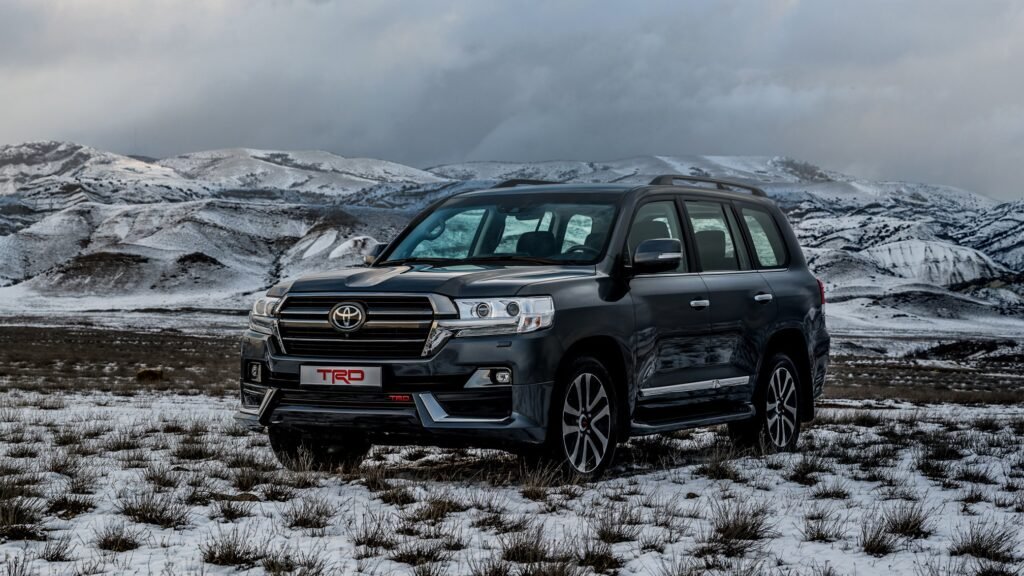
The LC200 Experience
Driving the 200 Series is all about that low, rumbling acoustic note and a linear wave of power. The 4.5-liter diesel V8 is legendary for its ability to pull all day without breaking a sweat. It feels heavy, mechanical, and infinitely dependable. Coupled with a tried-and-true 6-speed automatic, it delivers power like a freight train—predictable, massive, and unstoppable.
The LC300 Experience
Purists mourned the loss of the V8, but the new 3.3-liter twin-turbo V6 quickly silences critics. Thanks to a lightning-quick 10-speed automatic transmission, the LC300 drops the turbo lag of the old V8. It punches out 304 horsepower and 700 Nm of torque, easily outmuscling its predecessor. The power delivery feels snappy and immediate.
The Verdict: The LC200 wins on pure emotional nostalgia and long-range confidence (thanks to its massive 138L dual tank). However, the LC300 is undeniably faster, smarter, and significantly more fuel-efficient.
Exterior Design: Old-School Brawn vs. Sharpened Presence
Park them side-by-side, and you can see a decade’s worth of design evolution written in sheet metal.
- The Land Cruiser 200 is the definition of a traditional SUV. It is bulbous, heavily rounded, and wears its muscular bulk with pride. It has a high-riding, softly contoured stance that looks perfectly at home covered in mud or parked outside a safari lodge.
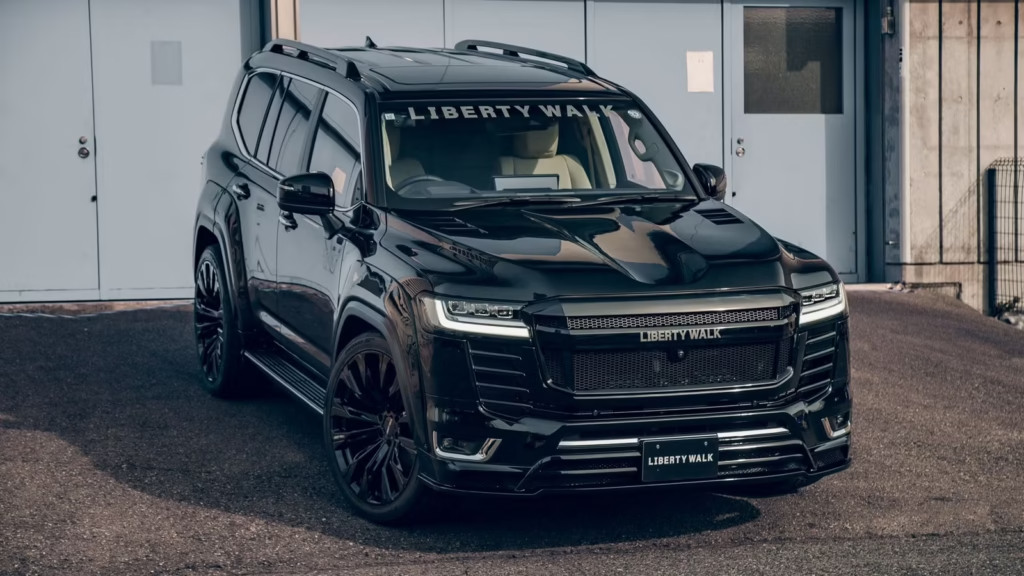
- The Land Cruiser 300 takes that rugged frame and sharpens it into a chiseled, commanding block. The front fascia is dominated by an enormous, aggressive grille flanked by sleek, swept-back LED matrix headlights. The lines are strictly rectangular, giving it a lower center of gravity appearance despite keeping the same ground clearance.
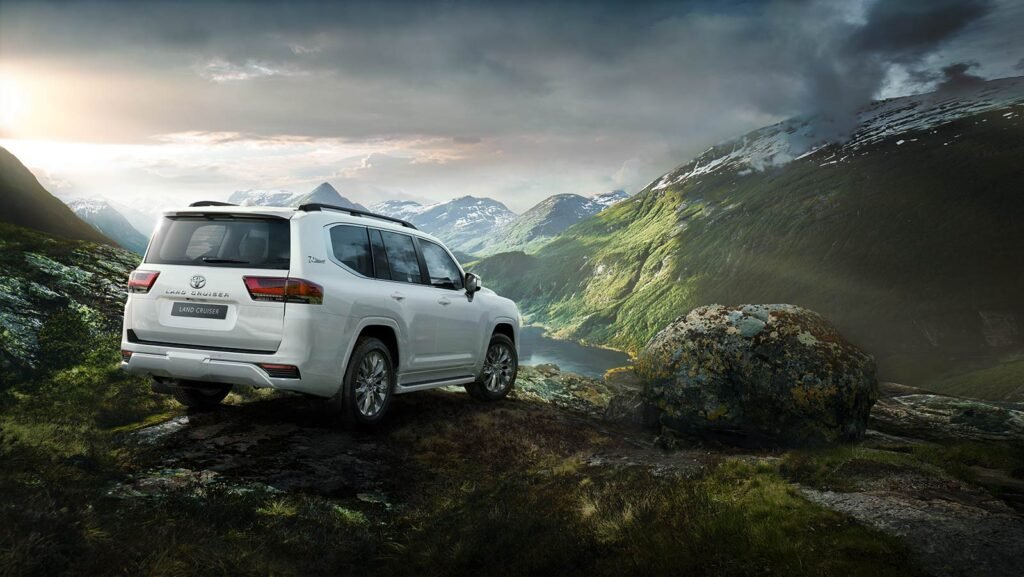
Toyota also introduced distinct personalities for the 300 Series. The Sahara ZX channels high-end city slicker vibes with chrome accents and 20-inch wheels, while the rally-inspired GR Sport swaps the chrome for a blacked-out mesh grille, matte finishes, and rugged, downsized wheels meant for punishing terrain.
Interior Luxury Features: From Utility to First-Class
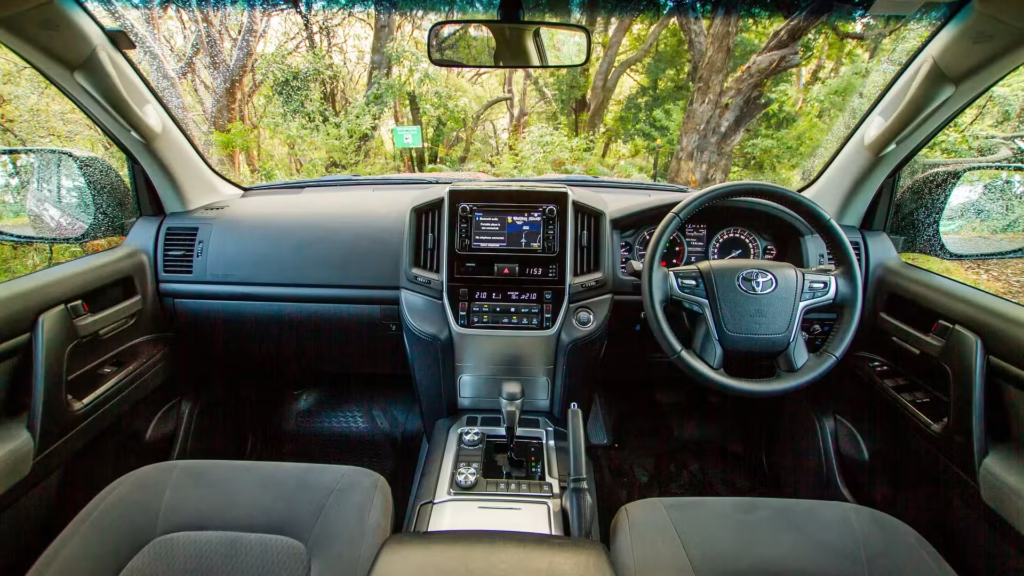
Step inside both cabins, and the generational leap feels less like an upgrade and more like a time-travel jump.
Land Cruiser 200: Analog Comfort
The LC200 cabin is a very comfortable, incredibly durable place to spend a 10-hour drive. It features plush leather-accented seating, excellent headroom, and tactile, oversized buttons that you can operate while wearing heavy work gloves. However, its small, aging 9-inch infotainment screen, dated graphics, and simplistic dashboard layout undeniably betray its late-2000s origins.
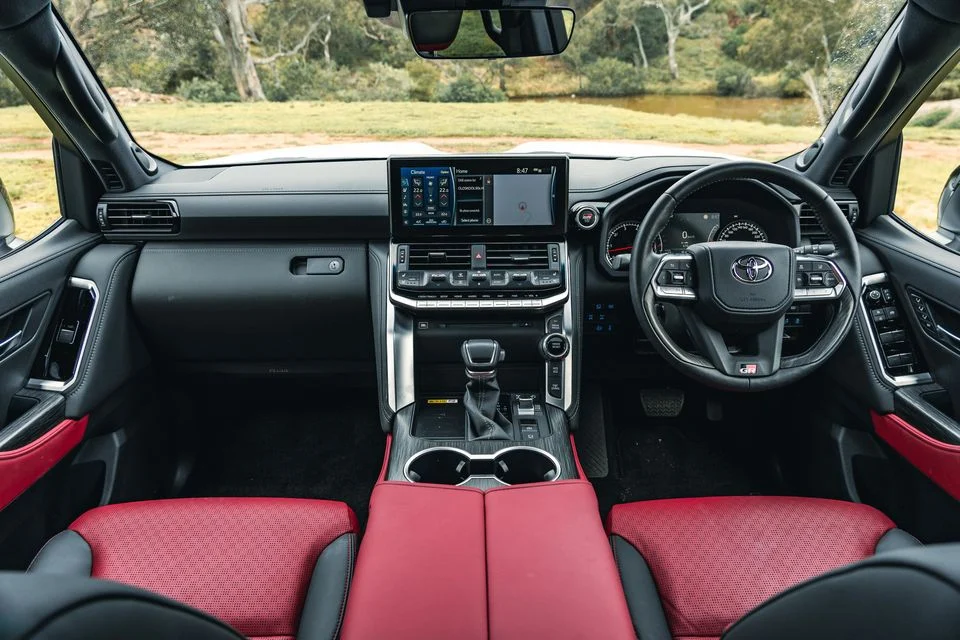
Land Cruiser 300: Digital Opulence
The LC300 moves the needle firmly into premium luxury territory. The dash is anchored by a massive 12.3-inch high-definition touchscreen, complemented by a heads-up display (HUD) for the driver.
- Seating & Climate: Both rows feature heated and ventilated seats (with premium leather options in red, black, or beige), tied to a masterful 4-zone climate control system.
- Audio & Tech: A premium 14-speaker JBL sound system turns the cabin into a moving concert hall, supported by modern conveniences like wireless Apple CarPlay, wireless Android Auto, and a hands-free power tailgate with a kick sensor.
Driving Dynamics: The Heavy Cruiser vs. The Precision Athlete
The way these two machines handle asphalt and dirt highlights the structural revolution beneath the skin.
[ LC200 Platform ] [ LC300 TNGA-F Platform ]
– Traditional heavy steel frame – High-tensile steel (200kg lighter)
– Hydraulic KDSS (Body roll control) – Electronic e-KDSS (Adaptive)
– Classic heavy hydraulic steering – Electric Power Steering (EPS)
On the Asphalt
Driving the LC200 on the highway feels like piloting a luxury yacht. It floats over road imperfections, but that soft suspension translates to noticeable body roll when tossing it into a tight corner. The steering is heavy and requires a firm hand.
The LC300, conversely, sheds 200 kilograms (around 440 lbs) compared to the 200. This diet, combined with the new TNGA-F chassis, makes it feel shockingly nimble. Thanks to the introduction of Electric Power Steering (EPS), navigating tight city streets or parking lots requires far less muscle. It corners flatter, brakes with less nose-dive, and tracks straight with the composure of a premium German luxury sedan.
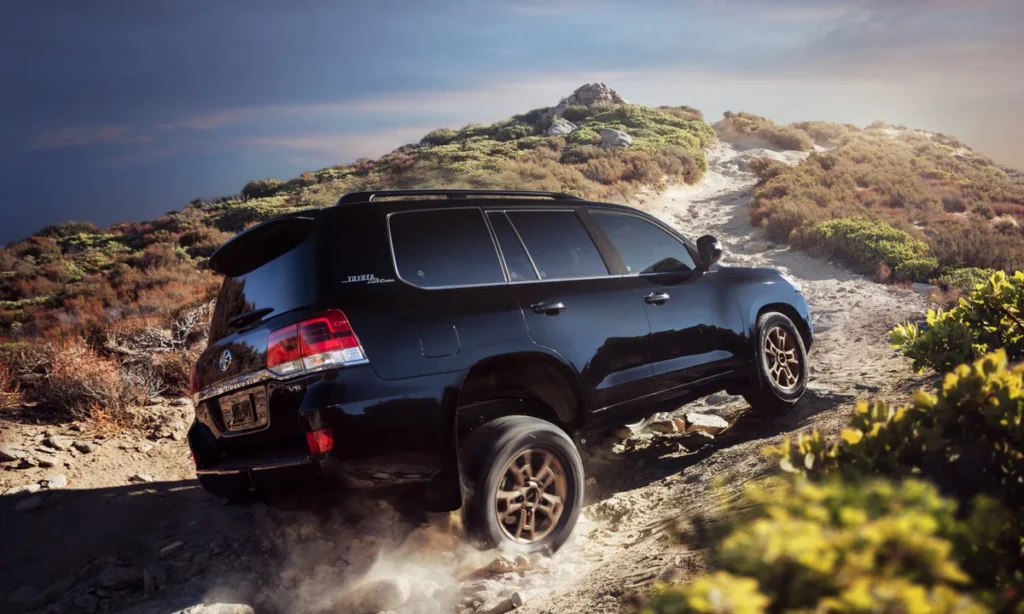
Off the Beaten Path
Off-road, the LC200 relies on raw suspension articulation and its mechanical Kinetic Dynamic Suspension System (KDSS) to keep its wheels on the ground. It is an unstoppable tractor.
The LC300 takes that mechanical capability and supercharges it with computing power. The upgraded e-KDSS (Electronic Kinetic Dynamic Suspension System) can instantly lock or completely free up the stabilizer bars electronically, adapting to extreme rock crawling or high-speed gravel trails on the fly. Paired with an updated Multi-Terrain Monitor system (giving you a 360-degree view “through” the bonnet to look at tire placement), the LC300 makes conquering treacherous terrain feel like child’s play.
Final Thoughts: Which Icon Reigns Supreme?
The choice between these two giants comes down to what you value most in a heavy-duty adventurer:
- Stick with the Land Cruiser 200 if you believe there is no replacement for displacement. If you want a proven, analog V8 workhorse with massive fuel capacity, zero electronic fussiness, and a decades-long track record of global service, the 200 remains an untouchable legend.
- Upgrade to the Land Cruiser 300 if you want the ultimate blend of modern luxury and effortless capability. It delivers more torque, sharper handling, a genuinely premium interior, and cutting-edge safety features—all without sacrificing an ounce of the nameplate’s legendary off-road heritage.
The 200 Series earned its crown through decades of survival; the 300 Series is busy building a new empire.
Compiled by Sipitali Shitsukane
Car Enthusiast, Vehicle Import Consultant