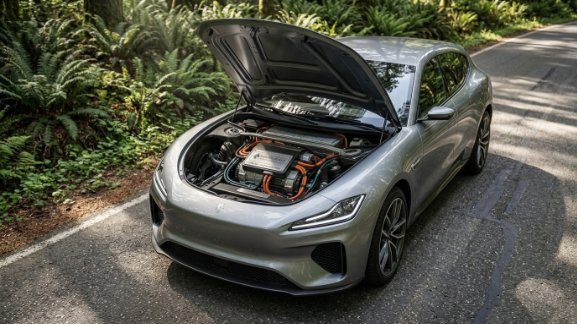

For over a century, buying a car was a transactional finality. You walked onto a dealership lot, picked a model with a specific engine, selected your favorite paint color, and drove off. What you bought on day one was exactly what you owned a decade later—minus some tire tread and plus a few rattles. If something broke, a mechanic fixed it with a wrench.
Today, that paradigm is completely dead.
We have firmly entered the era of the Software-Defined Vehicle (SDV). A modern car is no longer just a collection of mechanical parts wrapped in steel; it is a highly sophisticated, cloud-connected computing platform wrapped in a chassis. In the automotive industry, software has evolved from a tool that controls individual components into the literal nervous system of the vehicle.
Here is a look into how code is reshaping the way we drive, how car companies build, and what it means for the future of mobility.
What Actually Is a Software-Defined Vehicle?
To put it simply, a Software-Defined Vehicle is a vehicle whose features, functions, and overall user experience are primarily enabled and continuously upgraded through software rather than hardware.
Think of it like the transition from the old flip phone to the modern smartphone. Your old phone was a static piece of hardware. If you wanted a better camera or a new utility tool, you had to buy a completely new phone. Your smartphone, however, receives Over-the-Air (OTA) updates that drastically alter its capabilities overnight—optimizing its battery life, introducing new interfaces, or adding features that didn’t exist when you bought it.
In an SDV, the hardware becomes a standardized foundation. The real differentiation happens in the software layers. The vehicle’s braking profiles, suspension stiffness, cabin infotainment, battery efficiency, and semi-autonomous driving features are all governed by centralized code.
The Engineering Shift: From ECUs to Zonal Architecture
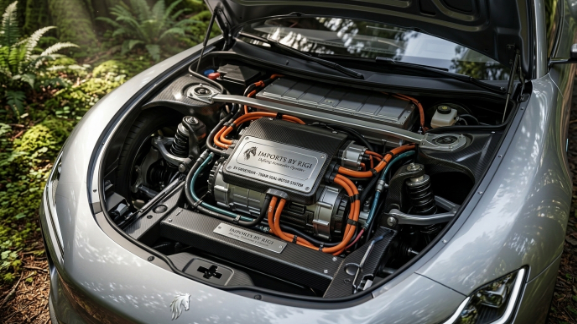
Under the hood, this transition requires a massive, structural overhaul of how cars are engineered.
Historically, cars relied on a distributed architecture. Every single feature had its own dedicated mini-computer, called an Electronic Control Unit (ECU). Your power windows had an ECU, your anti-lock brakes had an ECU, and your heated seats had an ECU. Premium modern cars frequently carried over 100 separate ECUs, all built by different suppliers using completely different programming languages.
Trying to upgrade a car with that setup via software is a nightmare. It is like trying to coordinate a choir where every singer speaks a different language and refuses to look at the same sheet music.
SDVs solve this by moving to a Centralized Zonal Architecture.
Instead of 100 scattered computers, the car relies on a few “SuperBrain” central computers connected to zonal controllers. This vastly simplifies the physical makeup of the vehicle.
Why the SDV Era Changes Everything for Drivers
The immediate benefits of the software-defined vehicle directly impact the person behind the wheel. The line between tech and transportation has blurred completely.
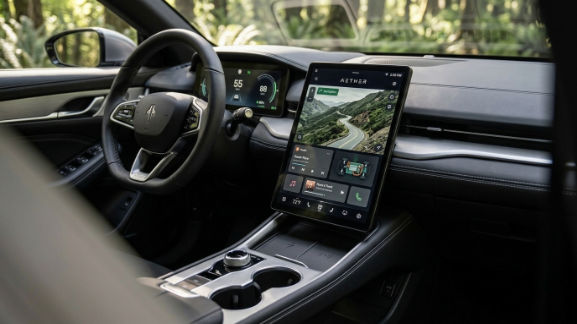
1. The Car That Gets Better Over Time
Instead of depreciating into obsolescence, an SDV actually matures. Manufacturers can push OTA updates while you sleep. You could wake up in the morning to find that your electric vehicle suddenly has 15 miles of extra range thanks to a smarter battery management algorithm, or that your Advanced Driver Assistance Systems (ADAS) have smoother highway lane-merging capabilities.
2. Predictable, Proactive Maintenance
Because these vehicles are continuously streaming diagnostic data to the cloud, predictive maintenance is becoming the norm. Rather than waiting for a terrifying “Check Engine” light to flash on your dashboard, the vehicle’s onboard software can flag a minute anomaly in an inverter or a fluid pump weeks before it fails, prompting a convenient repair schedule or even applying a digital software patch to prevent physical wear.
3. Hyper-Personalization
Inside the digital cockpit, automakers are leveraging generative AI and machine learning to craft highly personalized spaces. A vehicle can automatically recognize who is sitting in the driver’s seat via camera or smartphone, adjusting not just the physical mirrors and seat positions, but adapting the voice assistant’s tone, configuring the ambient lighting, and surfacing favorite navigation paths based on historical behavioral patterns.
The Dark Side: Friction, Subscriptions, and Security
While the technological promise of the SDV is immense, the transition hasn’t been entirely smooth. There is a palpable tension between the desires of auto manufacturers and the expectations of everyday consumers.
The Subscription Trap: One of the most controversial trends in the SDV space is the shift toward “Feature-on-Demand” business models. Because automakers can lock or unlock features via software, some have experimented with putting physical capabilities behind a paywall. Paying a monthly fee to use heated seats or remote start functionality that is already physically installed in your car has faced major consumer backlash.
Furthermore, turning a car into an IoT (Internet of Things) device significantly widens its cybersecurity attack surface. A malicious hack on a smartphone risks a data leak; a malicious hack on a moving, 4,000-pound vehicle poses a fundamental safety risk. This has forced regulatory bodies to step in with incredibly strict international compliance standards (such as UNECE R155/R156) to ensure that vehicle software updates are secure and auditable.