
The modern automobile is the product of more than a century of engineering, innovation, and industrial evolution. While many technological breakthroughs have shaped the automotive industry, few events had as profound an impact as World War II (1939–1945). Although the war brought immense human suffering and destruction, it also accelerated technological progress on an unprecedented scale.
Automakers that once produced passenger vehicles shifted their focus to military equipment, manufacturing tanks, trucks, aircraft engines, armoured vehicles, and other essential machinery. This dramatic transition pushed engineers to solve complex challenges in materials science, manufacturing efficiency, engine performance, and logistics. When the war ended, these innovations found their way into civilian vehicles, transforming the global automotive industry.
Today, many of the engineering principles, production methods, and technologies that define modern automobiles can trace their roots to the demands of World War II.
The Transformation of Automotive Manufacturing
Before the outbreak of World War II, automobile production primarily focused on meeting growing consumer demand. Companies competed by improving comfort, styling, and affordability while refining mass-production techniques introduced in the early twentieth century.
Once war began, governments required manufacturers to redirect their factories toward military production. Automotive companies rapidly converted assembly lines to build:
- Military trucks
- Tanks and armoured vehicles
- Aircraft engines
- Jeeps
- Ambulances
- Transport vehicles
- Military trailers
- Specialized mechanical equipment
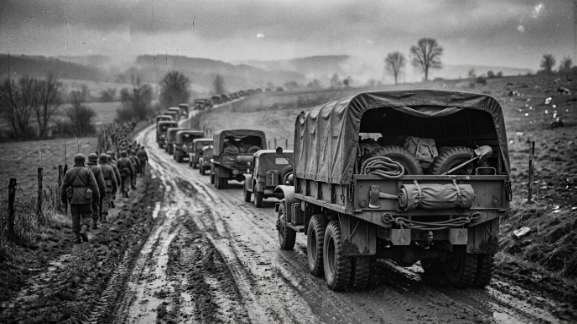
This transition required factories to dramatically increase production speed while maintaining consistent quality. Manufacturers developed new planning systems, standardized components, and improved quality-control processes to meet wartime demand.
When peace returned, these advances enabled automakers to produce civilian vehicles more efficiently than ever before.
Manufacturing Efficiency Reached New Heights
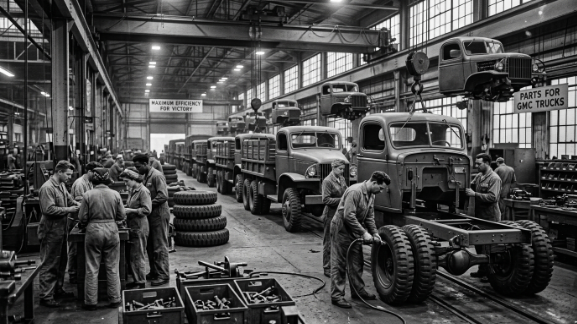
One of the war’s most significant contributions to the automotive industry was the refinement of industrial manufacturing.
To supply millions of military vehicles within tight deadlines, manufacturers optimized every stage of production. They introduced:
- Faster assembly techniques
- Better workflow planning
- Improved inventory management
- Standardized interchangeable parts
- Enhanced quality inspection procedures
- Advanced production scheduling
These methods reduced production costs while improving consistency and reliability.
The post-war automotive boom of the 1950s and 1960s would not have been possible without the manufacturing efficiencies developed during the war years.
Engineering Better Engines
Military operations demanded engines that were dependable under the harshest conditions.
Vehicles had to operate in deserts, mountains, forests, freezing winters, and tropical climates—often with limited maintenance opportunities.
This pressure accelerated research into:
- Engine durability
- Cooling systems
- Fuel efficiency
- Lubrication technology
- Transmission reliability
- High-performance diesel engines
Engineers designed powertrains capable of running for extended periods under extreme stress.
After the war, these engineering improvements significantly enhanced the reliability and longevity of civilian automobiles.
Advances in Materials Science
The scarcity of raw materials during wartime forced engineers to rethink vehicle construction.
Manufacturers experimented with:
- Lightweight aluminium alloys
- High-strength steel
- Improved rubber compounds
- Advanced welding techniques
- Corrosion-resistant materials
- Synthetic materials for selected components
These innovations helped reduce vehicle weight while increasing durability and performance.
Modern vehicles continue to benefit from this focus on stronger, lighter, and more efficient materials.
The Birth of Four-Wheel Drive Popularity
Although four-wheel-drive technology existed before World War II, the conflict demonstrated its true value.
Military vehicles needed to travel across:
- Mud
- Snow
- Sand
- Rocky terrain
- Flooded roads
- Remote battlefields
The legendary military Jeep became a symbol of reliability because of its ability to navigate terrain that conventional vehicles could not.
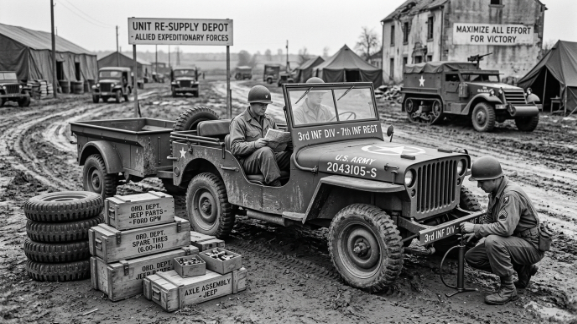
After the war, manufacturers adapted four-wheel-drive systems for civilian use, paving the way for today’s SUVs, pickup trucks, and off-road vehicles.
Improvements in Vehicle Durability
Military vehicles were expected to perform under conditions far more demanding than those faced by ordinary passenger cars.
Engineers prioritized:
- Stronger suspension systems
- Reinforced chassis
- Improved braking systems
- More durable drivetrains
- Enhanced cooling capacity
These improvements greatly influenced post-war vehicle design.
Consumers began expecting cars that required less maintenance and could withstand years of daily use.
Standardization Changed the Industry
During wartime production, governments encouraged manufacturers to standardize parts whenever possible.
Standardization simplified:
- Repairs
- Maintenance
- Logistics
- Spare parts distribution
- Vehicle servicing
After the war, this philosophy spread throughout the automotive industry.
Interchangeable components reduced manufacturing costs while making repairs faster and more affordable for consumers.
Even today, standardization remains one of the foundations of efficient automotive manufacturing.
Aerodynamics and Vehicle Design
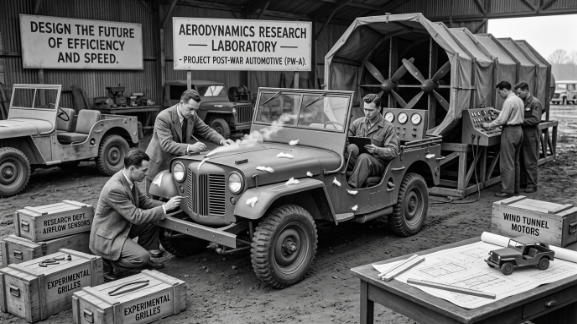
World War II accelerated research into aerodynamics, particularly through aircraft development.
Engineers gained a deeper understanding of airflow, drag, and fuel efficiency.
These lessons influenced automobile design during the post-war decades.
Vehicles gradually evolved from boxy, upright shapes into smoother, more streamlined designs that offered:
- Better fuel economy
- Improved stability
- Reduced wind noise
- Higher performance
Aerodynamics continues to play a critical role in modern automotive engineering, especially for electric vehicles where efficiency is paramount.
Better Logistics and Supply Chain Management
Supplying military forces across multiple continents required one of history’s most sophisticated logistics systems.
Automotive manufacturers learned valuable lessons about:
- Global supply chains
- Inventory forecasting
- Distribution networks
- Supplier coordination
- Transportation planning
These practices later became standard across the automotive industry.
Today’s just-in-time manufacturing systems owe much to logistics improvements pioneered during and after World War II.
The Rise of the Japanese Automotive Industry
Perhaps one of the most significant long-term consequences of World War II was the emergence of Japan as an automotive powerhouse.
Following the war, Japanese manufacturers faced the challenge of rebuilding a devastated industrial base with limited resources. Companies such as Toyota, Nissan, Honda, Mazda, and Mitsubishi responded by focusing on quality, efficiency, and continuous improvement.
Production philosophies such as Lean Manufacturing and the Toyota Production System emphasized eliminating waste, improving quality, and empowering workers to solve problems. These methods revolutionized vehicle manufacturing and influenced factories around the world.
By the 1970s and 1980s, Japanese automakers had earned a global reputation for producing reliable, fuel-efficient vehicles that offered excellent value, permanently reshaping the competitive landscape of the automotive industry.
Safety Became a Greater Priority
The engineering lessons learned during the war also influenced automotive safety.
Research into stronger structures, improved materials, and mechanical reliability encouraged manufacturers to place greater emphasis on protecting drivers and passengers.
In the decades that followed, the industry introduced:
- Seat belts
- Collapsible steering columns
- Crumple zones
- Disc brakes
- Anti-lock Braking Systems (ABS)
- Electronic Stability Control
- Airbags
- Advanced Driver Assistance Systems (ADAS)
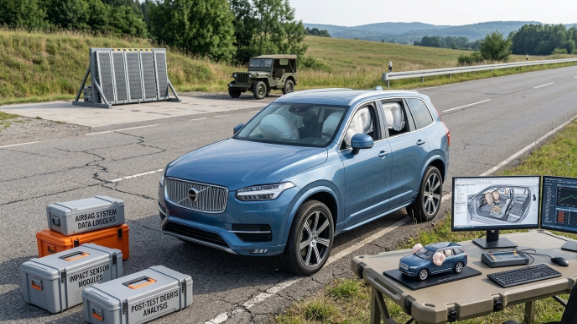
While many of these innovations were developed after the war, they were built upon engineering knowledge and manufacturing capabilities strengthened during that period.
From Military Innovation to Consumer Convenience
Many technologies originally developed for military applications eventually improved everyday driving.
Advances in electronics, communications, navigation, engine controls, and manufacturing precision gradually found their way into passenger vehicles.
Modern features such as electronic fuel injection, GPS navigation, sophisticated diagnostics, and intelligent safety systems all reflect the industry’s long-standing ability to adapt innovations developed for specialized purposes to consumer vehicles.
The Lasting Legacy of World War II
The post-war automotive industry experienced unprecedented growth. Rising consumer demand, expanding road networks, and economic recovery created the perfect environment for innovation.
Manufacturers competed by producing vehicles that were faster, safer, more comfortable, and more reliable than ever before. The engineering advances accelerated during World War II provided the foundation for decades of progress, influencing everything from manufacturing techniques to vehicle design and quality standards.
Today, the automotive industry continues to evolve with electric vehicles, connected mobility, autonomous driving technologies, and artificial intelligence. Yet many of the principles guiding these innovations efficient production, durable engineering, continuous improvement, and practical problem-solving can be traced back to lessons learned during the Second World War.
Conclusion
World War II was a defining moment in the history of the automotive industry. Although the conflict brought immense hardship, it also accelerated technological and industrial progress in ways that continue to shape modern transportation.
The demands of wartime production transformed factories, advanced engineering, improved manufacturing efficiency, and inspired new approaches to vehicle design and reliability. These developments laid the groundwork for the global automotive industry we know today.
As manufacturers now navigate the transition toward electric mobility, smart manufacturing, and sustainable transportation, the spirit of innovation that emerged during the post-war era remains as relevant as ever. The history of automotive progress demonstrates that periods of great challenge often become catalysts for extraordinary technological advancement.