
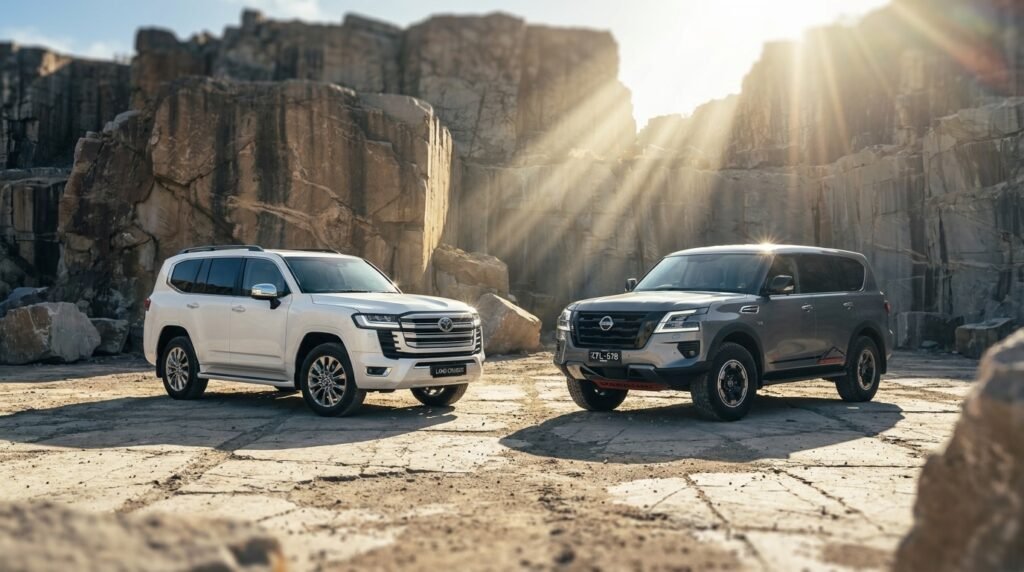
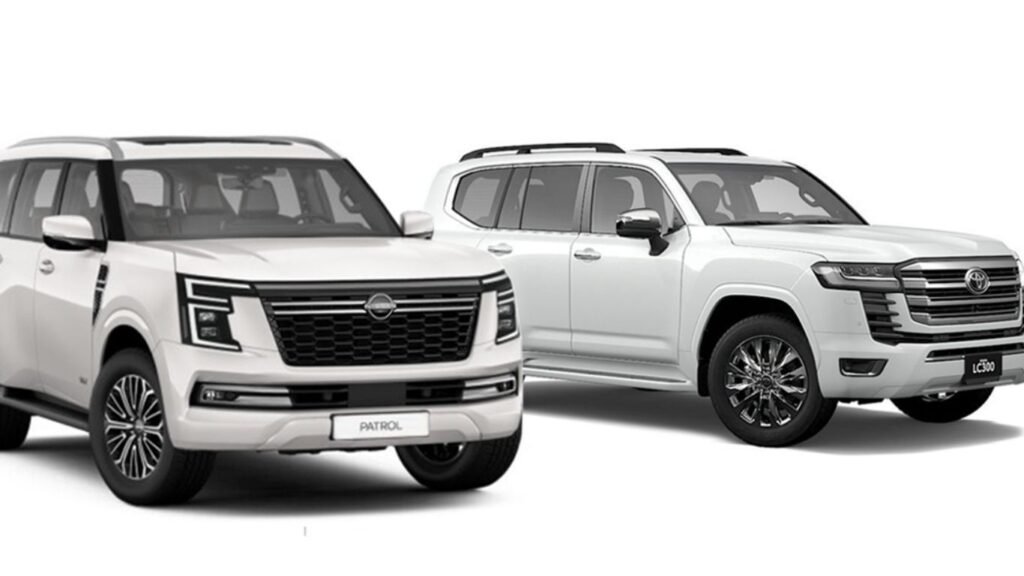
For more than seven decades, the rivalry between the Nissan Patrol and the Toyota Land Cruiser has defined the full-size 4×4 segment, pushing the boundaries of off-road engineering and overlanding capability. Today, that storied battle reaches its ultimate peak as the newly introduced Nissan Patrol goes toe-to-toe with the Toyota Land Cruiser 300 Series. Both behemoths have retired their iconic naturally aspirated V8s in favor of high-output twin-turbo V6 powertrains, signaling a massive leap in modern luxury, cabin technology, and forced-induction performance. But while Toyota relies on unbeatable resale value, technical trail agility, and diesel efficiency, Nissan counterattacks with superior horsepower, a larger footprint, and effortless high-speed comfort. Whether you are setting out to conquer punishing desert dunes, haul heavy loads across long highway stretches, or secure the ultimate executive family transport, choosing between these two modern heavyweights comes down to a clear divide in driving philosophy.
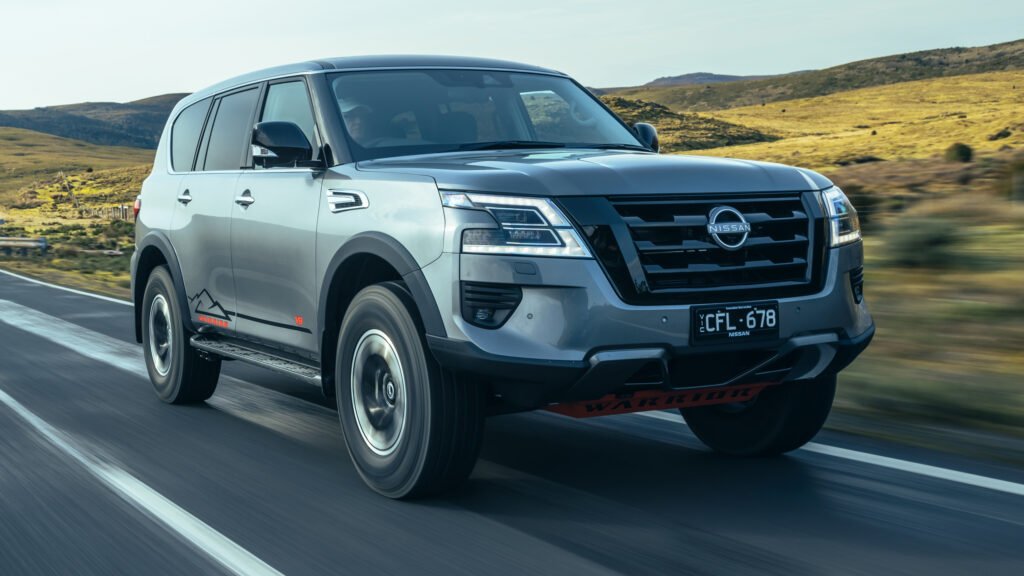
The Nissan Patrol remains an absolute colossus in the full-size SUV segment, renowned globally for blending heavy-duty off-road durability with executive-level highway comfort. Built on a traditional body-on-frame platform, the Patrol is engineered to withstand extreme conditions—from desert sand dunes to rough bush tracks. Models equipped with the naturally aspirated 5.6-litre V8 deliver 400 hp and 560 Nm of torque, giving it effortless power and a massive 3.5-tonne braked towing capacity. Newer generations feature dynamic twin-turbo V6 engine options paired with a responsive 9-speed automatic transmission, improving output while modernizing the powertrain.
Interior & Comfort
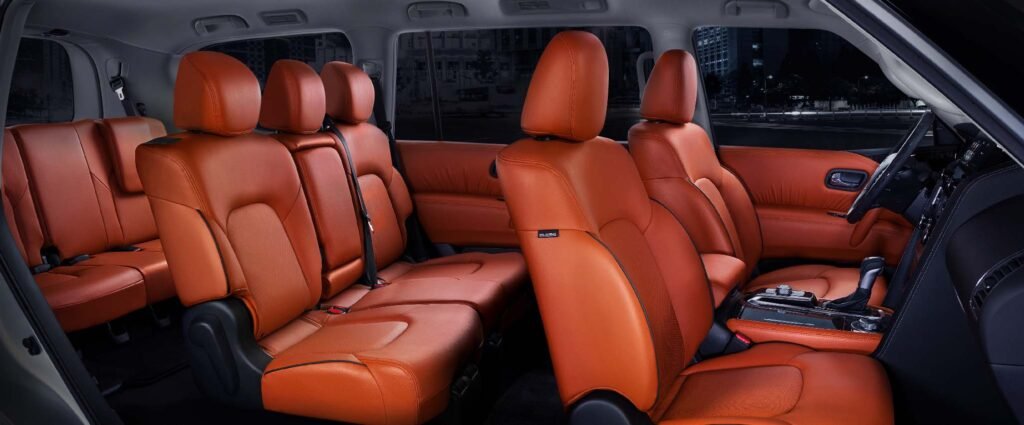
Inside, the cabin feels more like an armchair lounge than a rugged truck. Space across all three rows is immense, offering adult-friendly legroom, plush leather seating, and substantial cargo storage. High-spec trims feature updated wide touchscreen displays, multi-zone climate control, and advanced sound insulation
| Feature | Highlight |
| Powertrain Options | 5.6L V8 (400hp/560Nm) or 3.5L Twin-Turbo V6 (418hp/700Nm) |
| Drivetrain | Full-time 4WD with low-range transfer case & rear diff lock |
| Towing Capacity | 3,500 kg braked |
| Key Capability | Hydraulic Body Motion Control (HBMC) for reduced body roll |
Pros & Cons
- Pros: Unmatched off-road prowess, whisper-quiet highway ride, cavernous interior space, and reliable mechanical durability.
- Cons: High fuel consumption (averaging 14–20+ L/100km depending on driving conditions), and a large physical footprint that makes tight city parking a challenge.
The Nissan Patrol is the ideal vehicle if you need uncompromised towing power, serious off-road ability, and room for the whole family, serving as a direct competitor to the Toyota Land Cruiser.
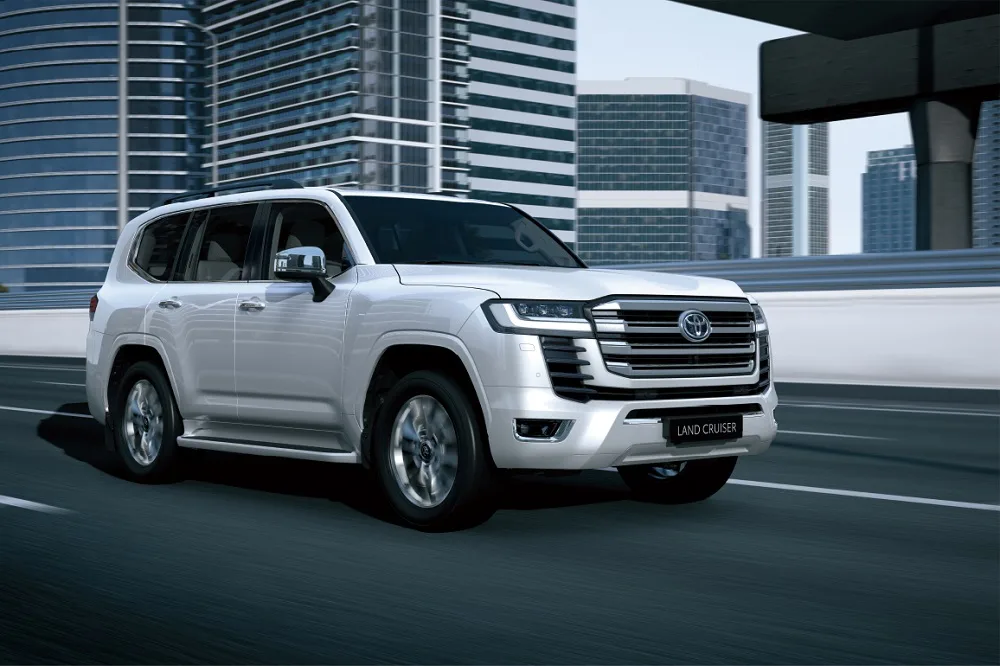
THE NISSAN PATROL VS THE LAND CRUISER 300
The Nissan Patrol (Y63/Y62) and the Toyota Land Cruiser 300 (LC300) represent the absolute peak of full-size, body-on-frame luxury SUVs. Both are engineered to conquer desert dunes and rugged tracks while doubling as executive cruisers. However, their design philosophies cater to slightly different drivers
Head-to-Head Specification Comparison
| Feature | Nissan Patrol (Y63) | Toyota Land Cruiser 300 |
| Primary Engine | 3.5L Twin-Turbo V6 (Petrol) | 3.3L Twin-Turbo V6 (Diesel) / 3.5L Twin-Turbo V6 (Petrol) |
| Max Power Output | ~425 hp (317 kW) | ~409 hp (Petrol) / ~304 hp (Diesel) |
| Max Torque | 700 Nm | 650 Nm (Petrol) / 700 Nm (Diesel) |
| Transmission | 9-Speed Automatic | 10-Speed Automatic |
| Drivetrain | Full-Time 4WD + Transfer Case + Rear Diff Lock | Full-Time 4WD + Center/Rear Diff Locks |
| Overall Length | ~5,350 mm | ~4,965 mm |
| Towing Capacity | 3,500 kg | 3,500 kg |
| Seating Capacity | Up to 8 passengers | Up to 7 passengers |
Key Performance & Capability Differences
1. On-Road Performance & Engine Character
- Nissan Patrol: Offers higher peak horsepower output, making it feel noticeably punchier on highways and during high-speed overtaking. The 3.5L twin-turbo engine delivers seamless acceleration with a sports-car-inspired rumble.
- Toyota Land Cruiser 300: Prioritizes low-end torque control over raw top-speed power. The LC300’s twin-turbo diesel variant is a towing powerhouse, providing effortless torque at very low RPMs.
2. Off-Road Engineering & Handling
- Nissan Patrol: Features adaptive suspension/Hydraulic Body Motion Control (HBMC). It handles high-speed sand dune driving exceptionally well and provides a flat, car-like cornering balance on paved roads.
- Toyota Land Cruiser 300: Utilizes Toyota’s E-KDSS (Electronic Kinetic Dynamic Suspension System) alongside Crawl Control and Multi-Terrain Select. It offers superior wheel articulation over extreme rocky terrain and technical off-road obstacles.
3. Cabin Space & Interior Comfort
- Nissan Patrol: Noticeably longer (~5.35 meters) with a longer wheelbase, resulting in a significantly more spacious third row and higher total cabin volume. It functions as a true adult 8-seater.
- Toyota Land Cruiser 300: Sits on a slightly tighter footprint. The driver-centric cockpit emphasizes rugged durability and intuitive physical controls over sprawling space.
Core Verdict
- Choose the Nissan Patrol if: You prioritize plush highway comfort, top-end acceleration, max cabin space for up to 8 passengers, and superior on-road driving dynamics.
- Choose the Toyota Land Cruiser 300 if: You want superior fuel economy (via the diesel option), maximum resale value retention, technical off-road articulation, and globally unmatched spare-part availability.
Compiled By Sipitali Shitsukane
Automotive Enthusiast, Car Imports Oonsultant