
In the Kenyan pickup truck landscape, two names dominate the conversation: the ubiquitous Toyota Hilux and the commercial powerhouse Isuzu D-Max. Go to any construction site in Nairobi or a farm in Nakuru, and you are bound to see these two workhorses battling for supremacy. The Hilux relies on its legendary resale value and bulletproof reputation, while the D-Max is celebrated for its sheer durability and fleet presence. However, this fierce rivalry often overshadows a third competitor that quietly offers a superior balance of comfort, advanced engineering, and off-road capability at a competitive price: the Mitsubishi Triton. For drivers looking beyond fleet standard issue, the Triton stands out as the ultimate multi-purpose double-cab.
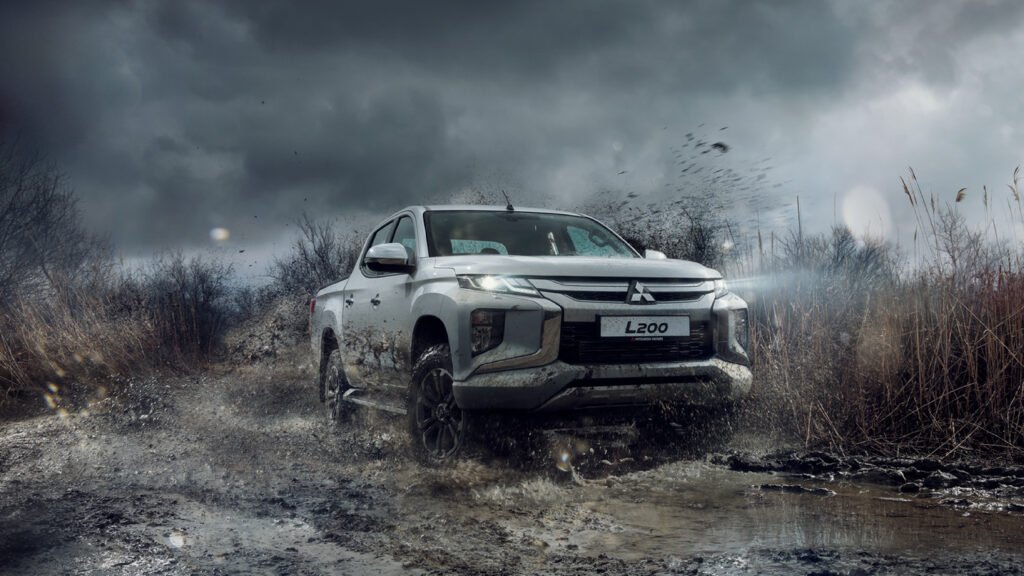
Bold Styling: The “Dynamic Shield” Design
The 2020 facelift marked a massive shift for the Triton. Mitsubishi abandoned the rounded, softer lines of earlier generations in favor of its aggressive “Dynamic Shield” front-end design language.
- Front Fascia: A high bonnet line, slim LED daytime running lights set high up, and deeply recessed main headlamp clusters give it an imposing road presence that easily holds its own next to a Hilux or Ford Ranger.
- Proportions & Profile: Unlike blockier competitors, the 2020 Triton retains Mitsubishi’s signature “J-line” layout between the cabin and the cargo bed. This allows for a generous, reclined rear seating angle without making the total vehicle length unwieldy.
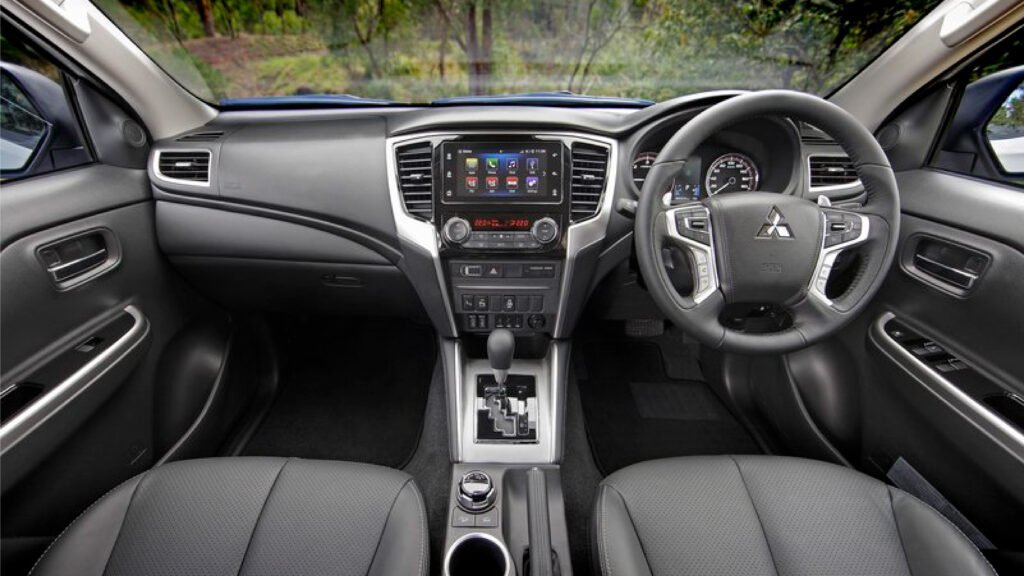
- Cabin Ergonomics: Inside, the 2020 Triton balances utility with modern passenger car comforts. Soft-touch materials along key contact points, a clear touchscreen infotainment setup, and high-set seating ensure driver visibility across rough terrain.
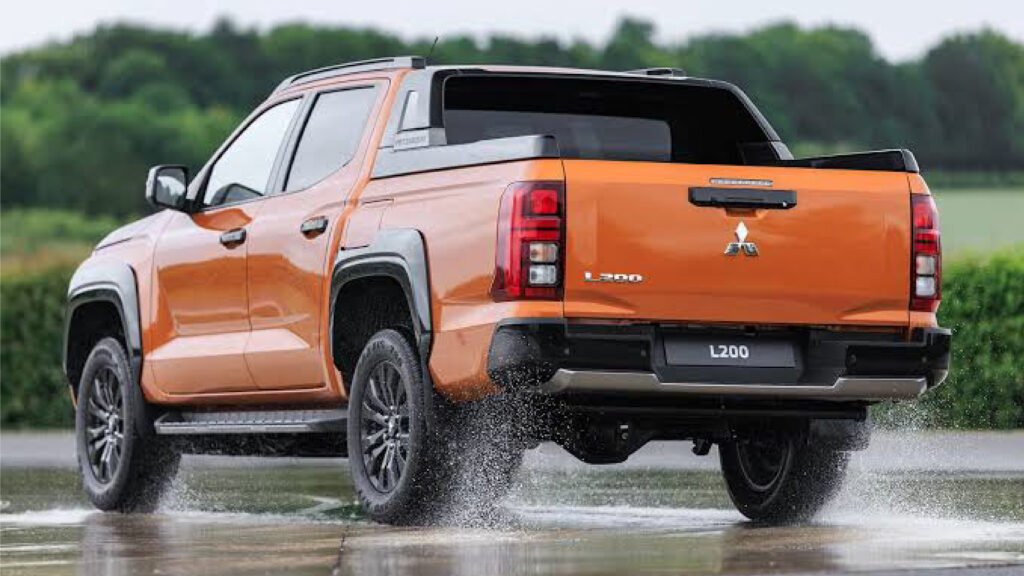
Under the Hood: 2.4L MIVEC Turbo-Diesel Performance
At the heart of the 2020 Mitsubishi Triton is one of the most sophisticated diesel engines in the pickup segment: the 2.4-liter 4N15 MIVEC Turbo-Diesel.
| Specification | Details |
| Engine Capacity | 2,442 cc (4-Cylinder Turbo-Diesel) |
| Power Output | ~178 hp (133 kW) @ 3,500 rpm |
| Torque | 430 Nm @ 2,500 rpm |
| Transmission Options | 6-speed Manual / 6-speed Automatic |
| Drivetrain System | Super Select II 4WD (Top Trims) |
What sets this engine apart in everyday driving is its all-aluminum block, which significantly reduces weight over the front axle for sharper steering response. Coupled with Mitsubishi’s Super Select II 4WD system, drivers can toggle between 2WD (2H) and full-time 4WD (4H) on paved, dry roads—a feature most mechanical 4×4 pickup trucks cannot do without causing driveline bind.
Practicality & Everyday Utility
A pickup truck lives or dies by its ability to haul and tow, and the 2020 Triton delivers solid workhorse credentials without sacrificing ride quality.
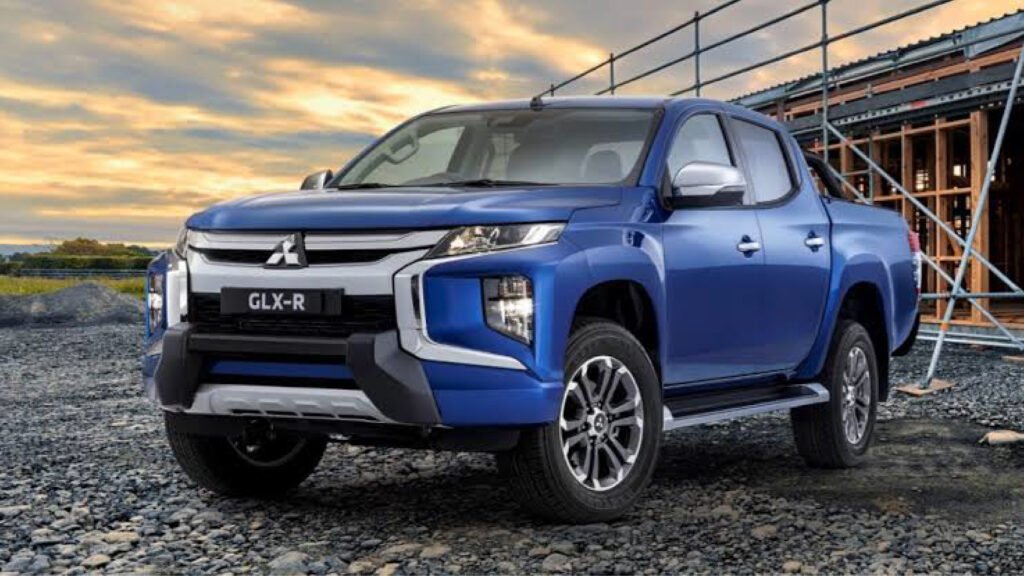
Payload & Towing: With a payload capacity hovering around 1 ton and a braked towing capacity of up to 3.1 tons, the Triton handles cargo beds full of construction gear, farm supply bags, or camping equipment with ease.
Ride Comfort: Traditional leaf-spring rear suspension can make empty trucks feel bouncy. Mitsubishi tuned the 2020 Triton’s rear dampers to settle quickly, making it noticeably smoother over speed bumps and corrugated dirt roads than many rigid utility vehicles.
Maneuverability: Thanks to its slightly shorter wheelbase relative to class giants, the Triton boasts a class-leading turning radius of 5.9 meters. Navigating tight parking spots in Nairobi or maneuvering around farm tracks is far less tedious.
Interior Comfort and Features
he 2020 updates to the Mitsubishi L200 (Triton) focused heavily on transforming the interior from a purely utilitarian work environment into a refined, comfortable space that feels much closer to a modern passenger SUV.
1. Materials & Tactile Quality
- Padded Surfaces: Mitsubishi added soft-touch padding and contrast double-stitching across high-contact zones, including the center floor console, door trims, and main armrests.
- Trim Accents: High-tier trims (such as the Barbarian or Instyle grades) feature satin-chrome trim frames around the air vents, instrument cluster, and gear selector to elevate the overall cabin aesthetic.
2. Seating & Cabin Ergonomics
- Front Bucket Seats: The front seats feature deep side bolsters and supportive shoulder padding to keep occupants secure during off-road driving. High-spec models offer 8-way power adjustment for the driver and seat heating.
- Rear Seat Angle (J-Line Design): Thanks to Mitsubishi’s signature “J-Line” cabin layout, the double-cab’s rear bench sits at a comfortable 25-degree recline angle, avoiding the upright posture common in traditional pickup trucks.
- Rear Passenger Amenities: Top trims include rear air circulator vents built into the roof lining, along with twin USB charging ports and a fold-down center armrest with cupholders.
3. Technology & Dashboard Layout
- Infotainment & Smartphone Integration: Centered on the dashboard is a touchscreen display with Apple CarPlay and Android Auto support.
- Instrument Cluster & Display: Clear analog tachometer and speedometer dials flank a high-contrast, full-color LCD Multi-Information Display that shows fuel economy, 4WD mode selection (Super-Select II), and safety alerts.
- Storage Convenience: The center console includes dedicated dual-tier smartphone storage trays near the front and rear USB ports.
What Changed for the 2022 Model?
Building on the strong foundation of the 2020 overhaul, the 2022 Mitsubishi Triton focused on refined trim packages, enhanced safety tech, and subtle functional updates. Depending on the global region and trim level, 2022 models introduced expanded driver-assistance systems—such as Forward Collision Mitigation, Blind Sport Warning, and Rear Cross Traffic Alert—making the double-cab even safer for family duties.
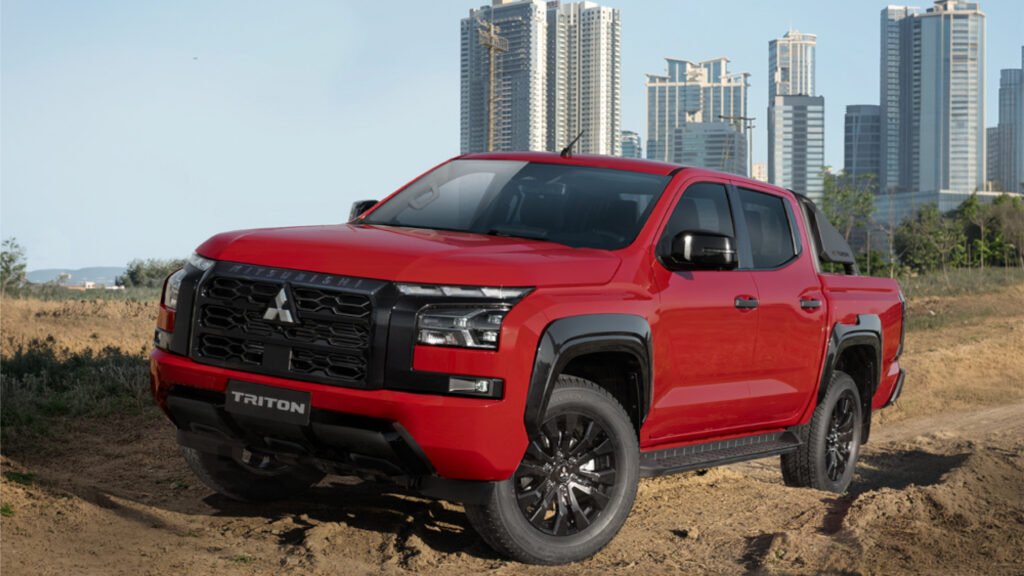
Mitsubishi also introduced special editions (like the Athlete variant) with blacked-out cosmetic accents, upgraded leather interiors, and enhanced off-road drive modes (Gravel, Mud/Snow, Sand, and Rock). The 2022 Triton solidified the model’s identity: a vehicle that works hard from Monday to Friday, but drives like a comfortable SUV over the weekend.
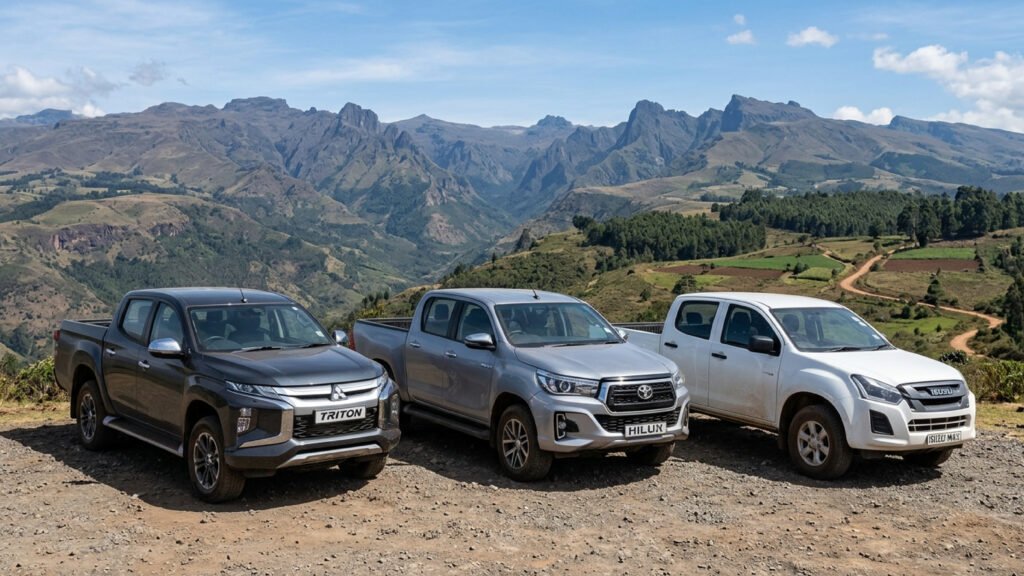
The Rivals: How Does the Triton Compete Against Her Rivals?
Here is a detailed comparison of the primary engine configurations and power figures across all three pickup trucks (2020 models onwards):
| Feature / Specs | Mitsubishi Triton | Toyota Hilux (Entry / Top Engine) | Isuzu D-Max (Entry / Top Engine) |
| Primary Engine Code | 2.4L MIVEC (4N15) | 2.4L D-4D (2GD-FTV) / 2.8L D-4D (1GD-FTV) | 1.9L Ddi (RZ4E) / 3.0L Ddi (4JJ3-TCX) |
| Displacement | 2,442 cc | 2,393 cc / 2,755 cc | 1,898 cc / 2,999 cc |
| Engine Construction | Aluminum block (lighter front axle) | Cast iron block | Cast iron block |
| Horsepower | 178 – 181 hp @ 3,500 rpm | 147 – 150 hp (2.4L) 201 – 204 hp (2.8L) | 150 – 163 hp (1.9L) 190 hp (3.0L) |
| Peak Torque | 430 Nm @ 2,500 rpm | 400 Nm (2.4L) 500 Nm (2.8L Automatic) | 350 – 360 Nm (1.9L) 450 Nm (3.0L) |
| Transmission Options | 6-speed Manual / 6-speed Automatic | 6-speed Manual / 6-speed Automatic | 6-speed Manual / 6-speed Automatic |
| Key Performance Trait | Excellent power-to-weight balance and smooth acceleration due to the lighter engine block. | Massive low-end pulling torque on the 2.8L variant, built for heavy haulage. | High fuel efficiency on the 1.9L; exceptional long-term engine longevity on the 3.0L. |
Compiled by Sipitali Shitsukane
Automotive Enthusiast, Car Imports Consultant