
When you flip on your car’s high beams on a pitch-black highway, you probably don’t think twice about the engineering marvel taking place right in front of you. Today’s headlights don’t just illuminate the road—they compute it.
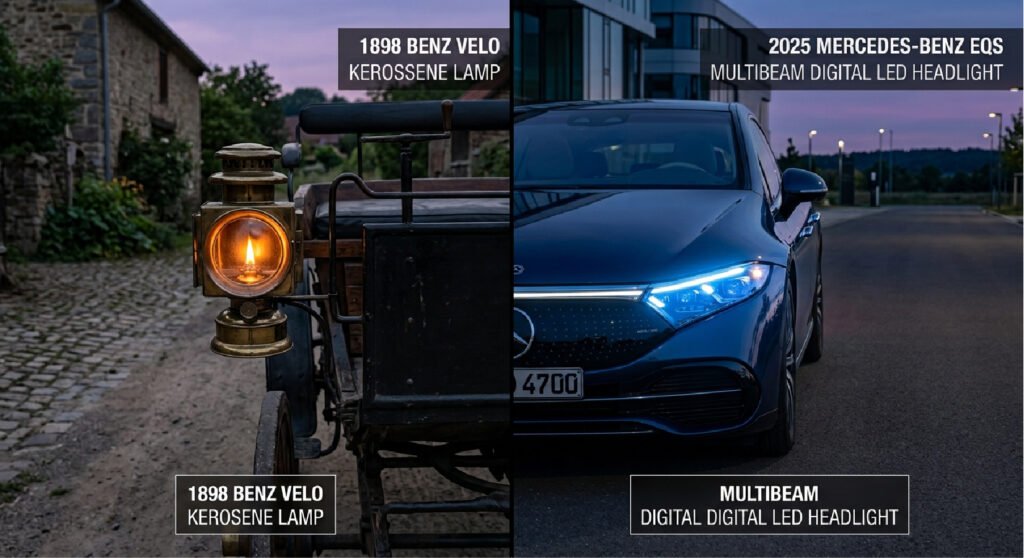
However, headlights weren’t always software-driven projector systems capable of painting high-definition images on asphalt. In fact, automotive lighting started as little more than glorified household lanterns. Here is a look at the fascinating, tech-filled evolution of car headlights, from literal open flames to modern-day supercomputing matrix lights.
Era 1: Flames on Wheels (Late 1800s – 1910s)
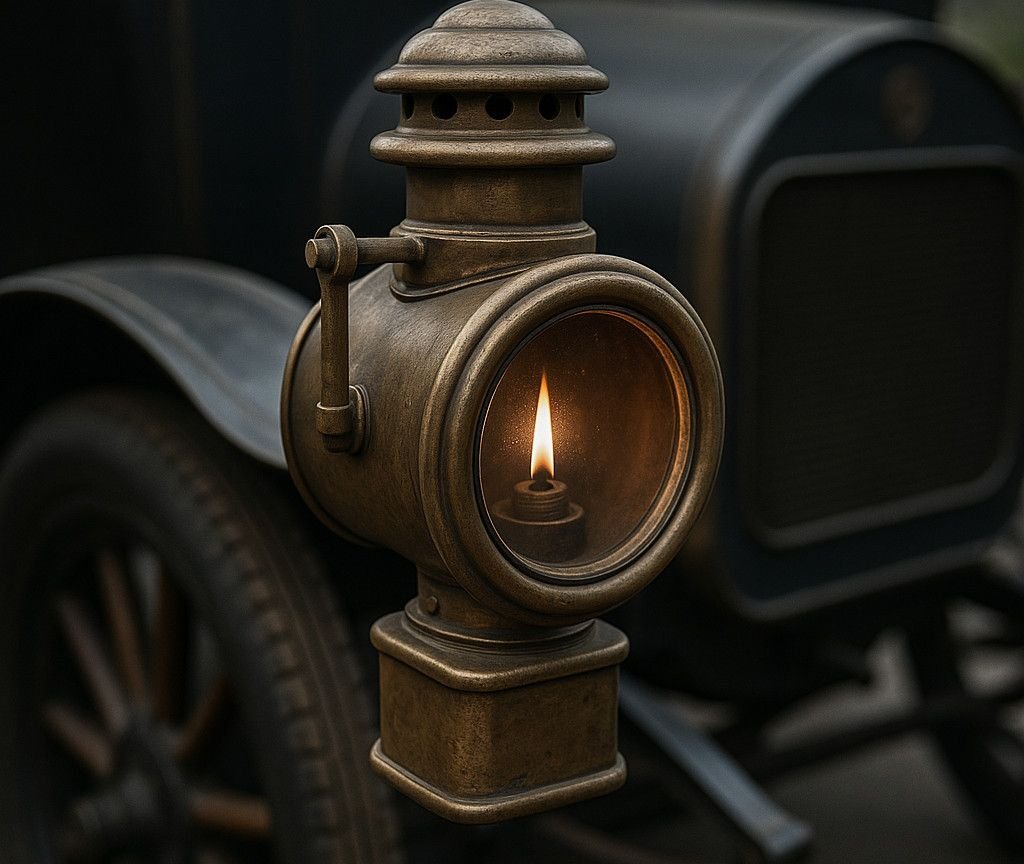
In the earliest days of motoring, night driving was essentially a extreme sport.
- Oil & Kerosene Lamps: Borrowed directly from horse-drawn carriages, early headlights ran on oil or kerosene. They provided almost zero illumination for the driver; their primary job was simply letting oncoming traffic know a vehicle was approaching.
- Acetylene Gas Lamps: By the late 1890s, manufacturers switched to acetylene lamps. Powered by a chemical reaction between calcium carbide and water, these produced a far brighter flame that was resistant to wind and rain. The down side? Drivers had to manually light them with a match before setting off.
Era 2: The Bulb Takes Over (1910s – 1980s)
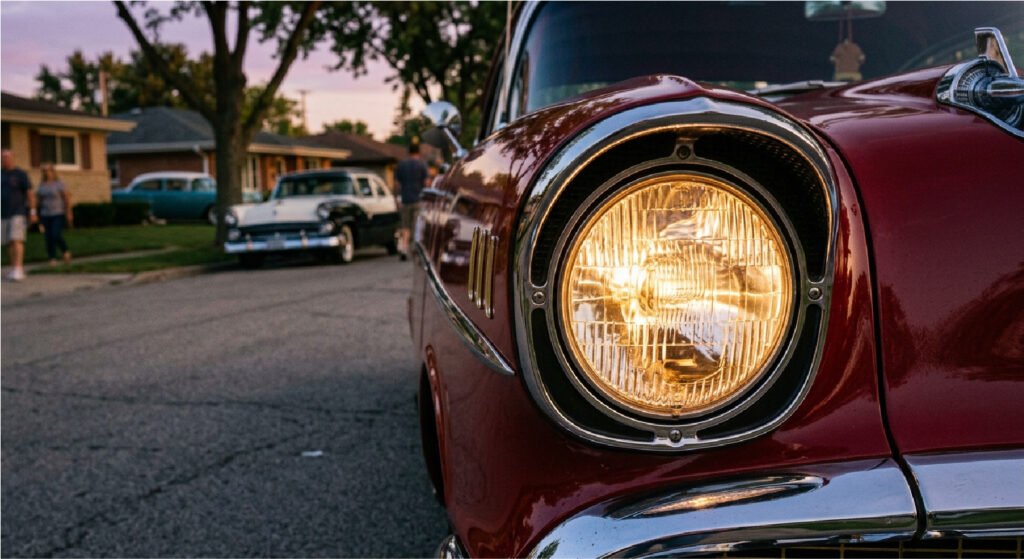
Once electrical alternators and batteries became reliable, the age of incandescent glass bulbs officially arrived.
- Electric Bulbs & Dual Beams: Electric headlights entered the scene around 1908, but 1924 brought a massive breakthrough—the dual-filament bulb. For the first time, drivers could switch between high and low beams using a single bulb.
- Sealed-Beam Units: Standardized in the US in 1940, sealed-beam headlights integrated the reflector, lens, and filament into one disposable assembly. While durable, if the filament burned out, you had to throw the entire assembly away.
- Halogen Bulbs (1960s): Halogen gas introduced a self-cleaning chemical cycle that prevented tungsten filaments from blackening the glass. Halogens were significantly brighter, lasted longer, and quickly became the worldwide industry standard for decades.
Era 3: Arc Lamps and the LED Revolution (1990s – 2010s)
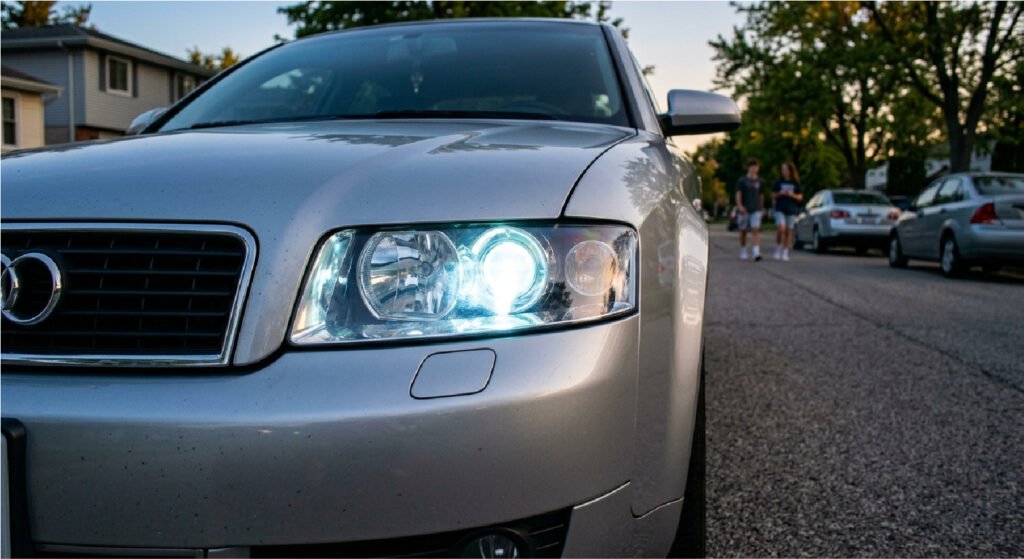
As car designs grew faster and sleeker, standard halogen yellow glow wasn’t cutting it anymore.
- HID / Xenon (1990s): Introduced on high-end luxury cars in the early ’90s, High-Intensity Discharge (HID) lights did away with filaments. Instead, they passed an electric arc through xenon gas, producing a bright, bluish-white light that closely mimicked daylight.
- Standard LEDs (2000s): Light Emitting Diodes changed everything. Consuming fractionally less power while lasting the lifetime of the car, LEDs allowed designers to shape headlights into thin, aggressive, signature light strip signatures.
Era 4: The Modern Era – Computer-Controlled & Digital Lighting
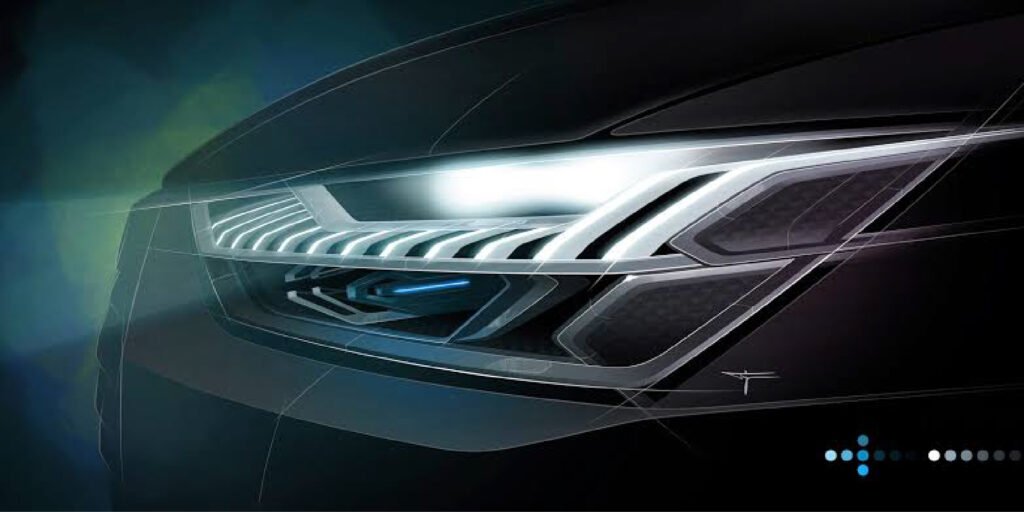
Today, a headlight is no longer a passive glass bulb—it’s an intelligent sensor network linked to cameras and ECU computers. Modern headlamps can selectively dim individual pixels to avoid blinding oncoming traffic while keeping the rest of the road brightly lit with high beams.
Here are the most cutting-edge headlight systems on the market right now:
| Brand | System Name | How It Works |
| Audi | Digital Matrix LED (DMD) | Uses DMD (Digital Micromirror Device) technology containing over 1.3 million micromirrors per headlight. It acts like a movie projector, projecting turn-lane guides onto the road, displaying welcome animations, or shielding oncoming cars with millimeter precision. |
| Porsche | HD Matrix LED | Packs 32,000 individually controlled micro-LED pixels per headlight. Controlled by a dedicated processor using camera feeds, it can illuminate the road up to 600 meters ahead while dynamically masking multiple vehicles simultaneously. |
| Mercedes-Benz | Multibeam Digital LED | Features over 1 million pixels per headlamp. Beyond anti-glare high beams, it projects safety symbols (like lane-keeping warnings or pedestrian alerts) directly onto the pavement ahead of the driver. |
| BMW | Laserlight / Adaptive LED | Utilizes laser diodes fired into a fluorescent phosphor crystal. The result is a pure white beam that casts light nearly 600 meters down dark country roads without overheating or wasting energy. |
Compiled by Sipitali Shitsukane
Automotive Enthusiast, Car Imports Consultant