
When people hear the name Toyota, they immediately think of cars. Land Cruisers. Corollas. Hiluxes. Prados. Hybrid technology. Reliability. But Toyota did not begin with an engine, a steering wheel, or even a car.

Toyota’s story began with a textile loom.
Long before the Toyota badge appeared on a vehicle, a Japanese inventor named Sakichi Toyoda was trying to solve a very different problem: how to make weaving more efficient, and that is what makes Toyota’s history particularly interesting for Kenya. The lesson is not simply that a textile company eventually became a car manufacturer. The deeper lesson is that industrial transformation often begins by becoming exceptionally good at solving one problem—and then using the knowledge, capital, technology and people developed from that success to solve another.
THE STORY STARTED WITH A LOOM
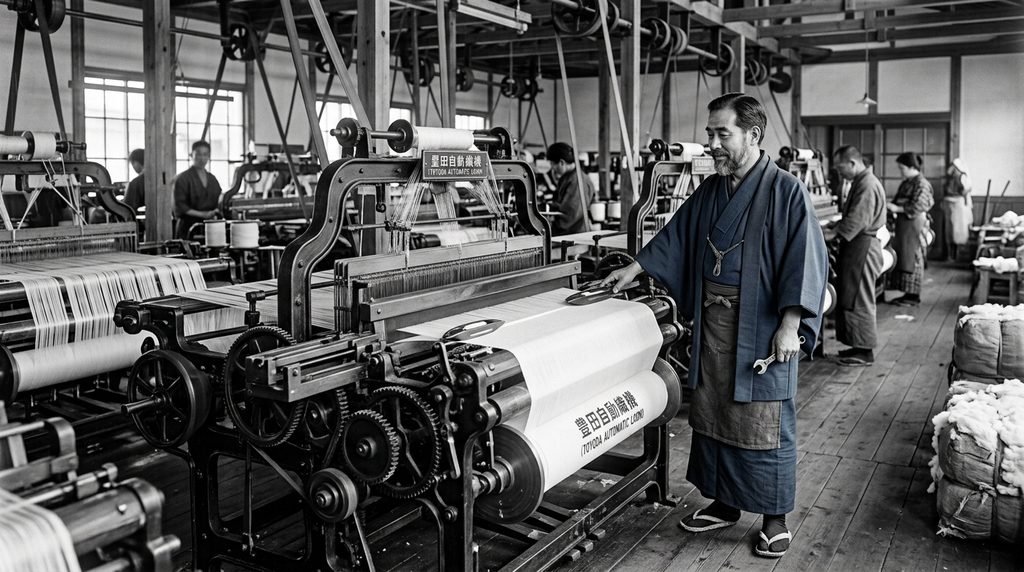
Sakichi Toyoda was born in 1867 in what is now Shizuoka Prefecture, Japan. His interest was in machinery and manufacturing, particularly textile production. He began developing hand looms and eventually created increasingly sophisticated power looms. In 1896, he completed the Toyoda power loom, which significantly improved productivity and quality compared with traditional manual weaving. But Sakichi was not simply interested in producing more machines, he was interested in solving problems through engineering.
His inventions progressively introduced mechanisms that could improve efficiency and eventually detect problems automatically. His work culminated in the Type G automatic loom, introduced in 1924. The machine could automatically change shuttles and incorporated mechanisms that could stop the loom when certain problems occurred. In other words, Sakichi was beginning to build something much bigger than a textile machine, he was developing a culture of automation, quality control, efficiency and continuous improvement, that culture would eventually become deeply connected with Toyota’s identity.
THE LOOM CREATED SOMETHING MORE VALUABLE THAN A PRODUCT
In 1926, Toyoda Automatic Loom Works was established to manufacture and sell the automatic looms developed by Sakichi. Then something important happened. The company’s technology attracted international attention. In 1929, the British textile machinery company Platt Brothers & Co. entered into an agreement with Toyoda concerning patent rights for the Type G automatic loom outside specified markets. This generated something that would later prove extremely important:
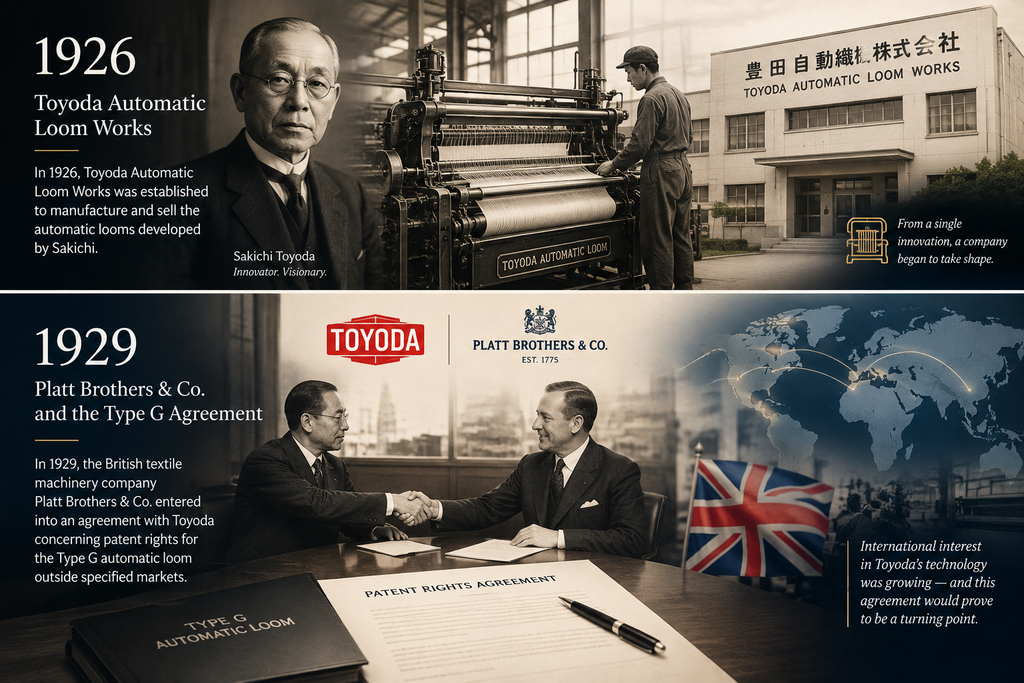
capital and confidence.
The Toyoda family now had industrial experience, manufacturing knowledge, engineering talent, intellectual property and a growing business. But they did not simply remain satisfied with textile machinery. The next generation was looking somewhere else.
ENTER KIICHIRO TOYODA
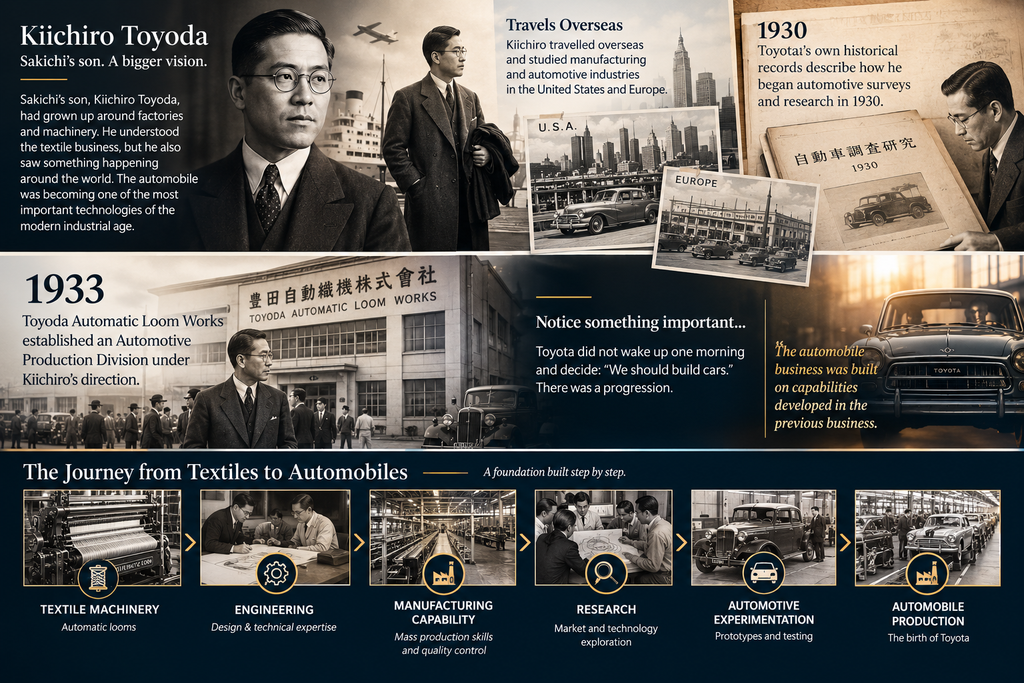
Sakichi’s son, Kiichiro Toyoda, had grown up around factories and machinery. He understood the textile business, but he also saw something happening around the world. The automobile was becoming one of the most important technologies of the modern industrial age. Kiichiro travelled overseas and studied manufacturing and automotive industries in the United States and Europe. Toyota’s own historical records describe how he began automotive surveys and research in 1930. In 1933, Toyoda Automatic Loom Works established an Automotive Production Division under Kiichiro’s direction.
Notice something important here. Toyota did not wake up one morning and decide:”We should build cars.” There was a progression. Textile machinery → engineering → manufacturing capability → research → automotive experimentation → automobile production. The automobile business was built on capabilities developed in the previous business.
THEY DIDN’T START BY COPYING FOREVER
One of the most interesting parts of the story is that Toyota initially had very little experience in automobile manufacturing. So they studied. They purchased machine tools, examined foreign vehicles, investigated materials and components, recruited people with automotive experience and they began experimenting.
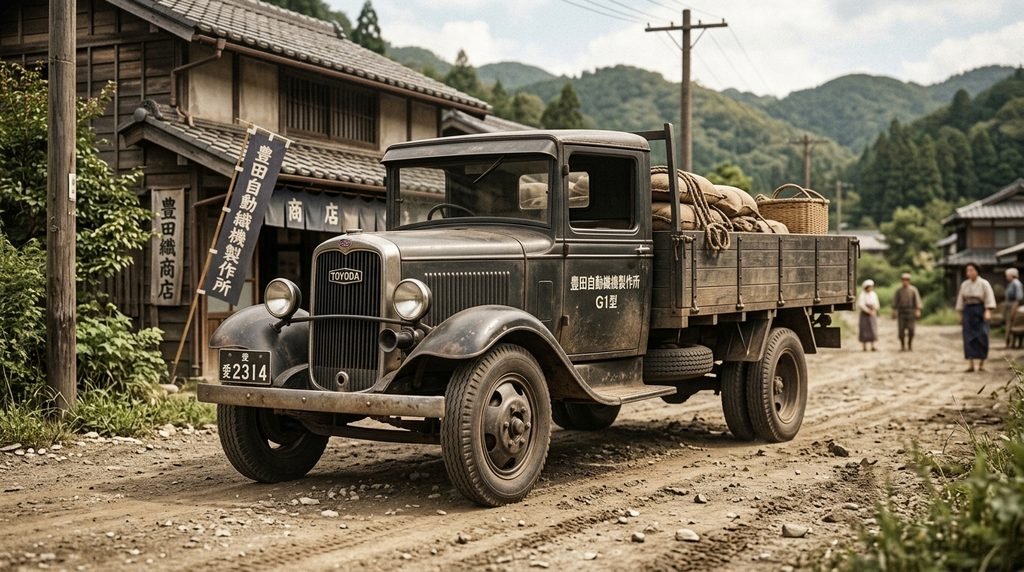
Toyota’s historical records show that Kiichiro’s team examined vehicle components, materials, production machinery and manufacturing methods while building its automotive knowledge base. Then came the Toyoda Model G1 Truck in 1935. A year later, the Toyoda Model AA passenger car appeared and 1937, Toyota Motor Co., Ltd. was established.
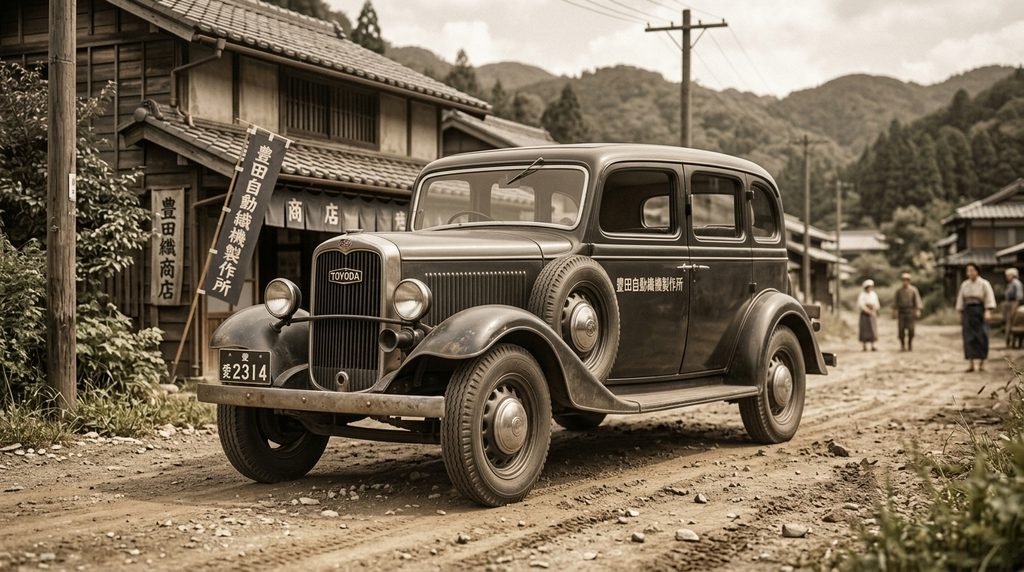
The company had officially entered the automobile industry. A textile machinery business had become an automobile manufacturer and that transformation would eventually produce one of the world’s most influential automotive companies.
BUT THE REAL CONNECTION IS NOT TEXTILES AND CARS
This is where Toyota’s history becomes much more relevant to Kenya. The obvious interpretation is: “Kenya should manufacture cars.” That is part of the conversation, but it is not the biggest lesson. The bigger lesson is:
Kenya needs to build industrial capabilities that can evolve.
Toyota’s textile business created expertise in machinery, engineering, manufacturing, automation, quality control, production systems, research and development, skilled labour, supply chains Those capabilities did not disappear when Toyota entered automobiles. They travelled with the company. This is a critical distinction. A country does not industrialize simply because it opens a factory. Industrialization happens when a country develops capabilities that can be reused, improved and transferred into new industries.
WHAT DOES THIS MEAN FOR KENYA?
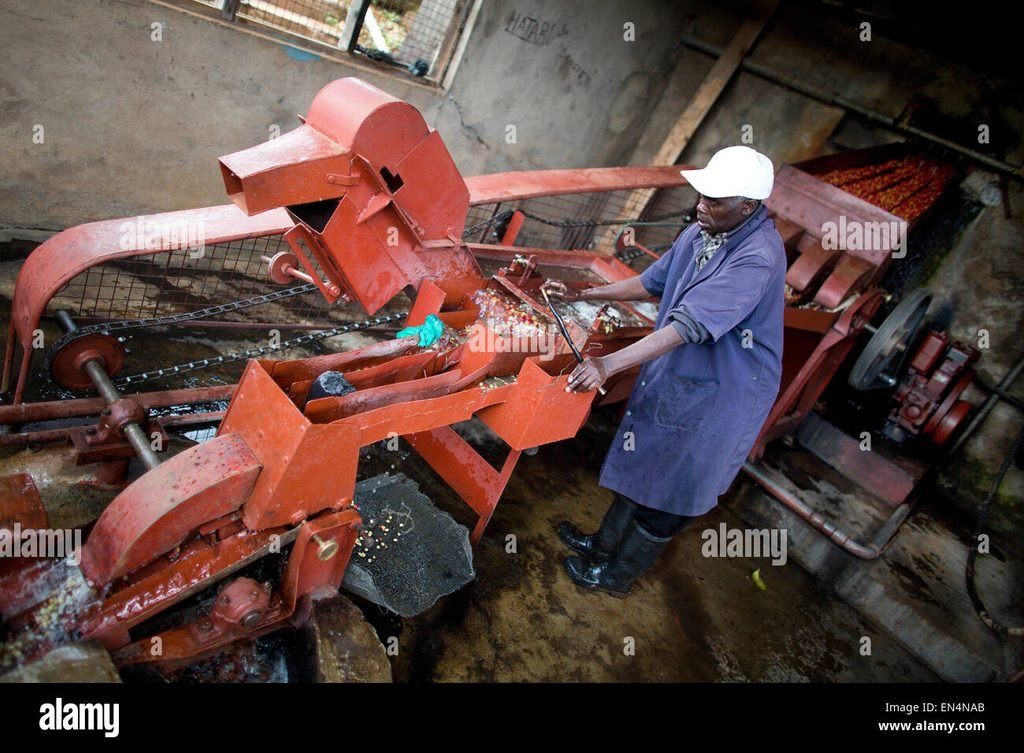
Kenya has industries with enormous potential to become foundations for something much larger. Take agriculture. Kenya produces tea, coffee, flowers, fruits, vegetables, dairy products and other agricultural commodities, but imagine moving beyond simply exporting the raw or minimally processed product. Instead of only exporting coffee: coffee → processing → packaging → machinery → food technology → export brands. Instead of only producing agricultural products: agriculture → processing → cold-chain logistics → packaging → agricultural machinery → technology. Instead of simply selling leather: livestock → hides → leather processing → footwear → automotive interiors → export manufacturing. The objective is not merely to produce more. It is to move further up the value chain.
KENYA DOESN’T HAVE TO START WITH THE FINISHED PRODUCT
This may be one of the most important lessons from Toyota. Toyota did not begin by attempting to compete with the world’s automobile manufacturers, it began with something it understood, then it developed technological capabilities, then it moved into a related but more ambitious industry, then it continued learning.
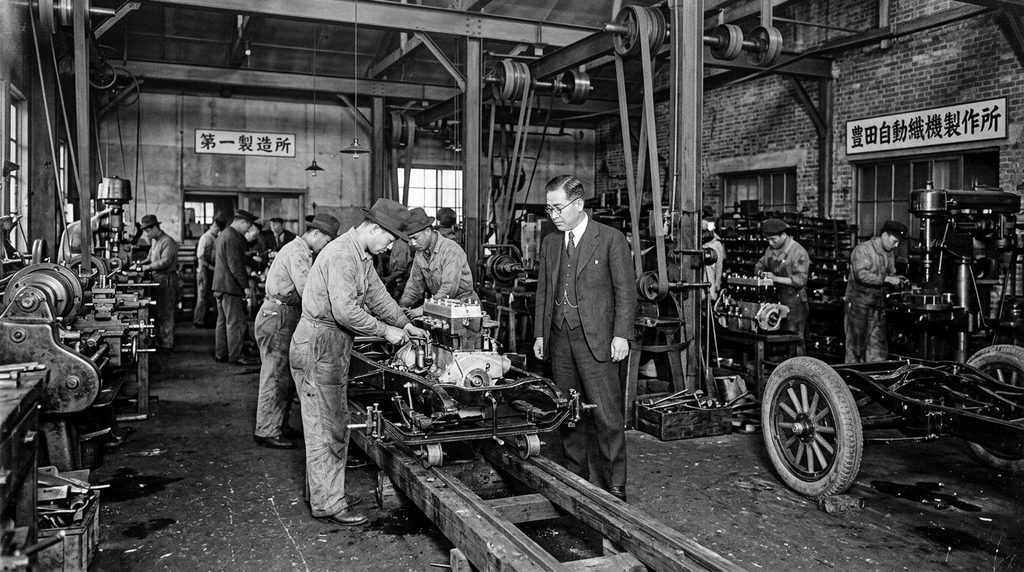
For Kenya, the question therefore shouldn’t always be: “What finished product can we manufacture?” A better question might be: “What capabilities can we develop today that will allow us to manufacture something more sophisticated tomorrow?”
That changes the conversation. Instead of asking only whether Kenya can manufacture a vehicle, we can ask: Can Kenya manufacture vehicle components? Can Kenyan companies produce wiring harnesses? Can we develop automotive seats and interiors? Can we manufacture tyres or selected plastic and metal components? Can we build battery components? Can we develop automotive software? Can universities and manufacturers collaborate on automotive engineering? Can local companies become suppliers to international manufacturers? Because once an industrial ecosystem develops, the possibilities expand.
THE AUTOMOTIVE LESSON IS ESPECIALLY IMPORTANT
Kenya already has an automotive ecosystem. We have vehicle importers. We have dealerships. We have mechanics. We have body shops. We have spare-parts businesses. We have logistics companies. We have vehicle financing. We have assembly operations. We have thousands of people whose livelihoods are connected to automobiles. But an automotive ecosystem can go much further.
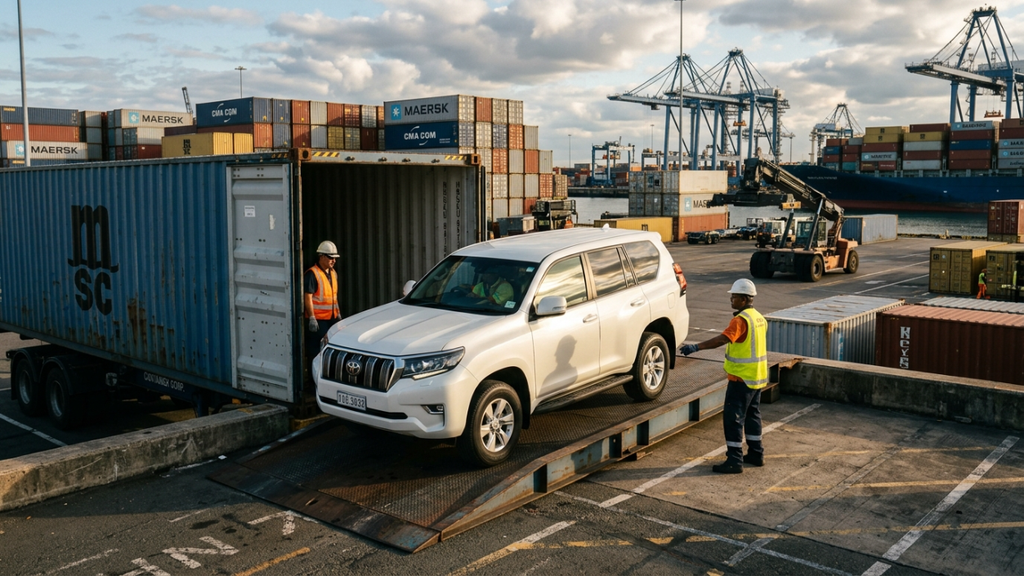
Imagine a Kenya where a vehicle arriving on our roads does not simply represent an imported finished product. Imagine Kenyan companies supplying some of its components. Imagine Kenyan engineers designing systems for African conditions. Imagine local manufacturers developing components specifically for African roads, climates and operating environments. Imagine Kenyan companies exporting those components to other African markets. That is a much larger industrial opportunity.
AND THEN THERE IS THE TOYOTA PRODUCTION SYSTEM
Toyota’s influence goes beyond the cars themselves. The company’s modern production philosophy has roots in the automatic loom developed by Sakichi Toyoda. Toyota describes the Toyota Production System as being based on the elimination of waste and the pursuit of efficient production, with its roots tracing back to the automatic loom and later developments under Kiichiro Toyoda. This is where another lesson emerges.
Efficiency is not simply about working harder.
It is about designing systems that reduce waste. Less unnecessary movement, less waiting, less defective production, less excess inventory, less wasted material, less downtime, more consistency, more learning, more value from the same resources. That philosophy is relevant far beyond automobile factories. It applies to Kenyan agriculture, logistics, construction, manufacturing, hospitals, technology and to almost every business.
THE BIGGEST LESSON: DON’T UNDERESTIMATE THE FIRST INDUSTRY
Perhaps the most powerful lesson from the Toyoda story is that the industry you start in does not necessarily determine the industry you eventually become known for. Sakichi Toyoda became famous for textile machinery. His son took the knowledge, capital and industrial foundation created by that business and entered automobiles. The result was Toyota Motor Corporation. That means Kenya should not necessarily ask: “Which industry will make us the next Toyota?” Instead, perhaps we should ask: “Which industries can we become exceptionally good at today and what could those capabilities allow us to build tomorrow?” That is a very different question.
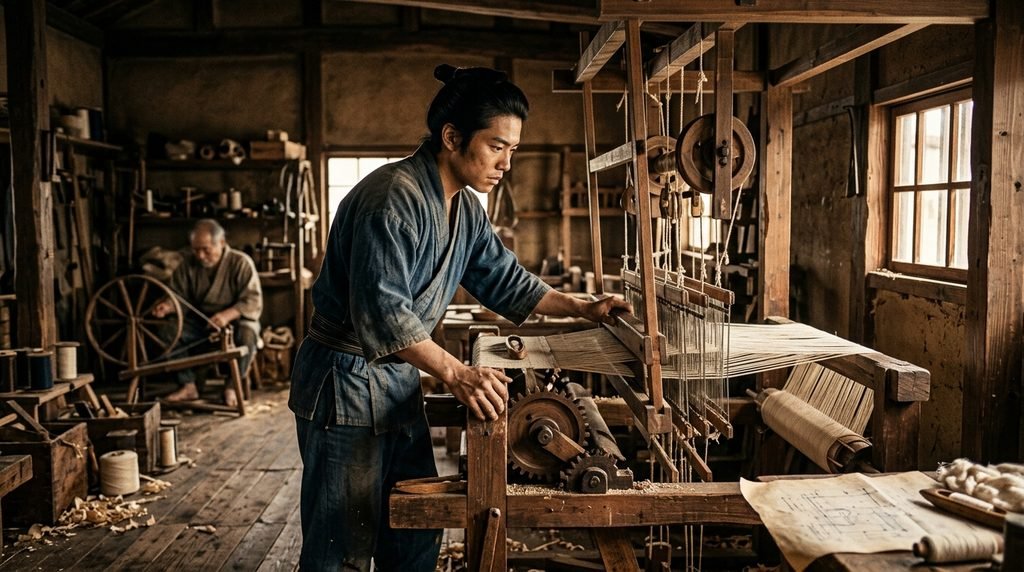
FROM LOOMS TO LAND CRUISERS
There is something almost poetic about Toyota’s history. The company that would eventually build vehicles capable of crossing deserts, mountains and some of the world’s most difficult roads began with a machine designed to move thread through fabric. A loom, not a car, not an engine, not a Land Cruiser, just a loom. But the underlying principles were already there:
Identify a problem. Build a better solution. Test it. Improve it. Develop the people and technology around it. Reinvest. Then take those capabilities somewhere new. That is how an industrial company evolves, and perhaps that is one of the lessons Kenya can take from Toyota. We don’t necessarily need to begin by asking how to build the final product, we need to begin by building the knowledge, skills, technology, manufacturing capacity and systems that make the final product possible. Because Toyota’s greatest invention may not have been the automobile, it may have been the ability to turn knowledge from one industry into capability for another, and that is a lesson that goes far beyond cars. Kenya’s next great industrial story may already exist. The question is whether we recognize the potential in what we are already building.