
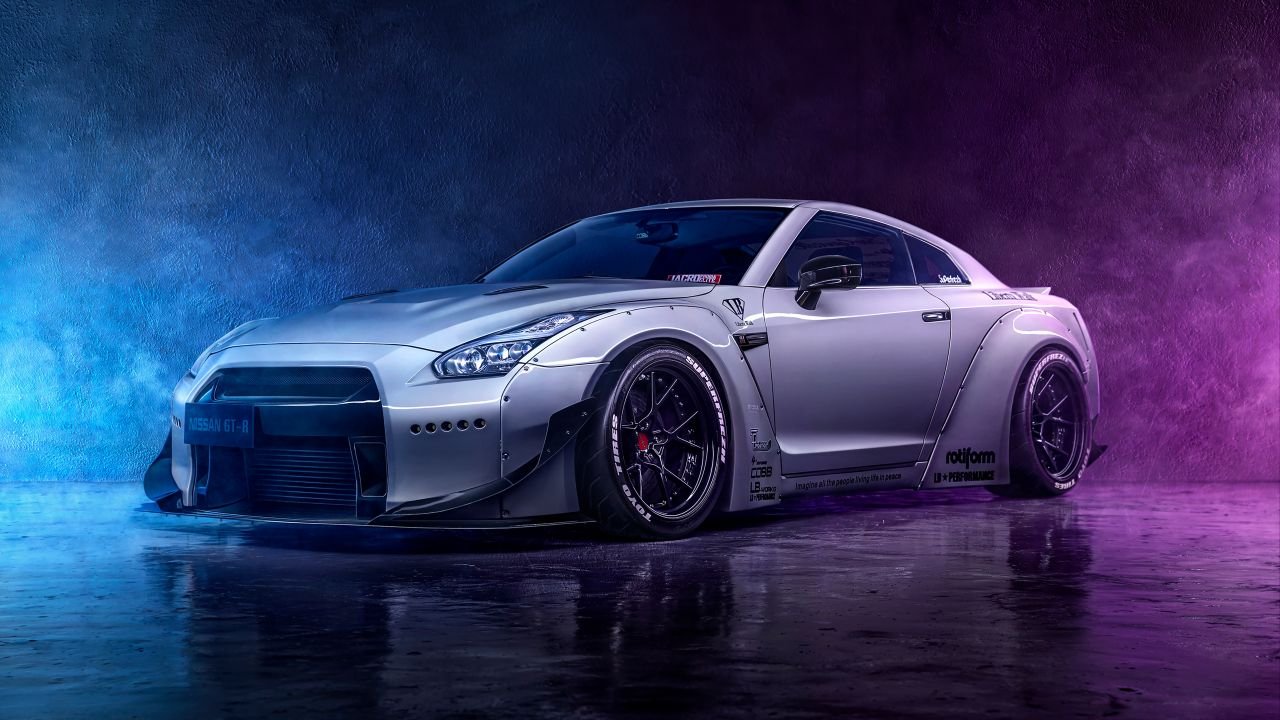
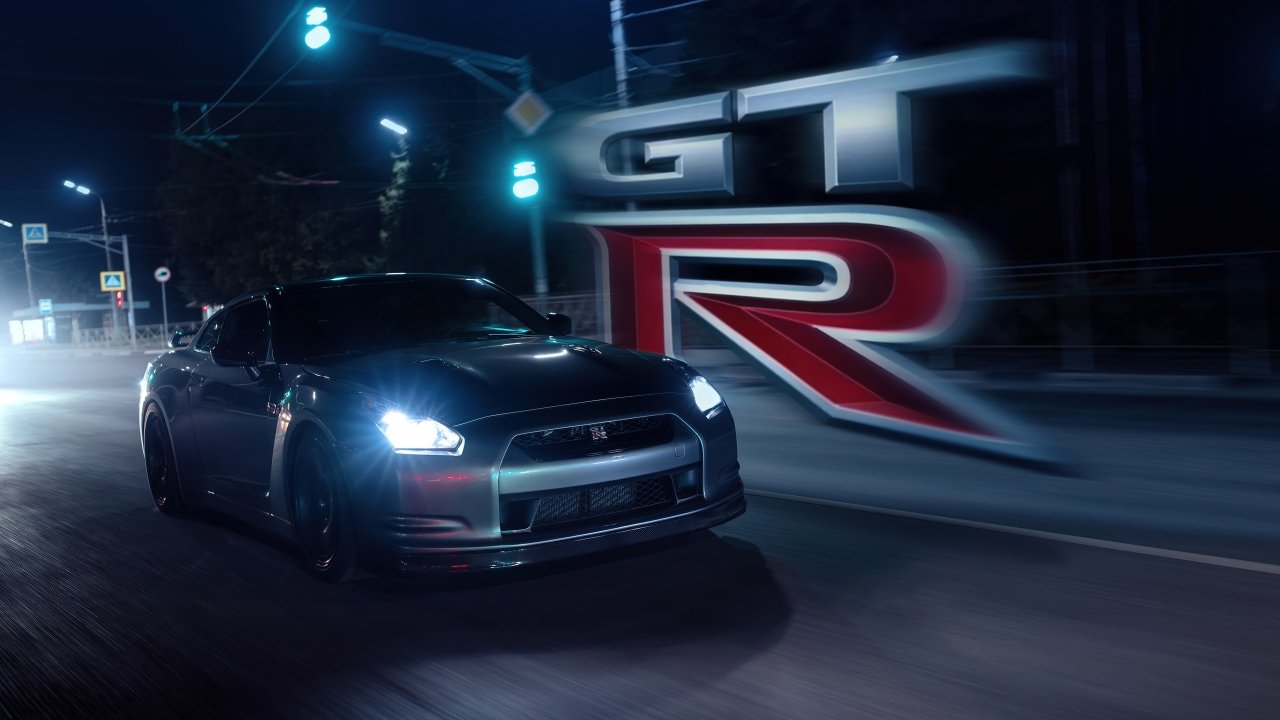
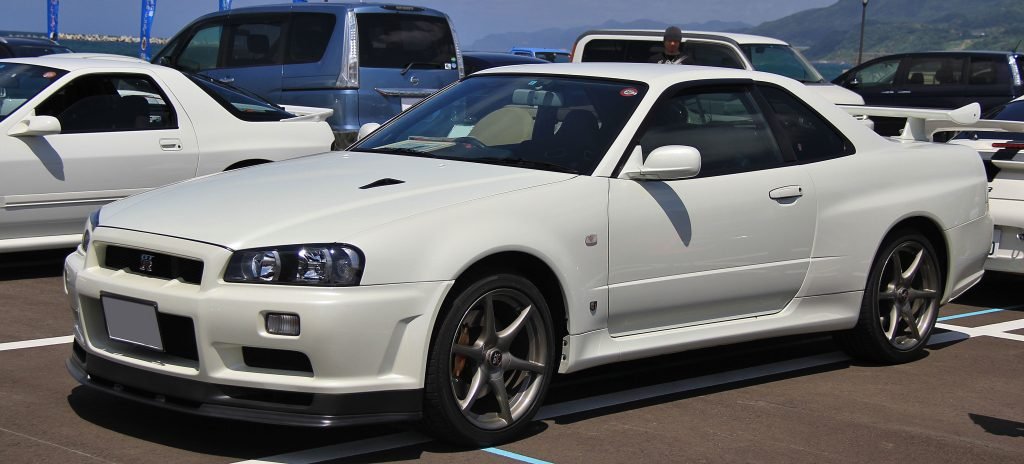
The story of the Nissan GT-R is less about a car and more about a mechanical uprising. It began in 1969 with the Skyline PGC10, a boxy sedan that quietly laid the foundation for a racing dynasty. However, it was the R32 generation in the late 1980s that truly earned the “Godzilla” moniker by utterly annihilating its competition in the Australian Touring Car Championship. This lineage of dominance evolved through the legendary R34—a car that became the poster child for a generation of enthusiasts—before culminating in the R35. Launched in 2007, the R35 dropped the “Skyline” name to become a standalone global predator, designed with a singular, obsessive focus: to prove that a Japanese grand tourer could out-accelerate and out-corner the established European elite.
Visually, the GT-R rejects the delicate, flowing aesthetics typical of Italian supercars in favor of a “Masculine Beauty” that feels ripped from a futuristic anime. Its design philosophy is rooted in brutalist functionality, where every crease and vent serves an aerodynamic purpose. The car features a remarkably low drag coefficient of 0.26, achieved through a silhouette that manages airflow with surgical precision. From the signature “Air Blade” fenders that relieve pressure from the wheel wells to the iconic four round taillights that pay homage to its ancestors, the exterior is a masterclass in aggressive efficiency. It doesn’t try to look fast; it looks like it was shaped by the wind it intends to conquer.
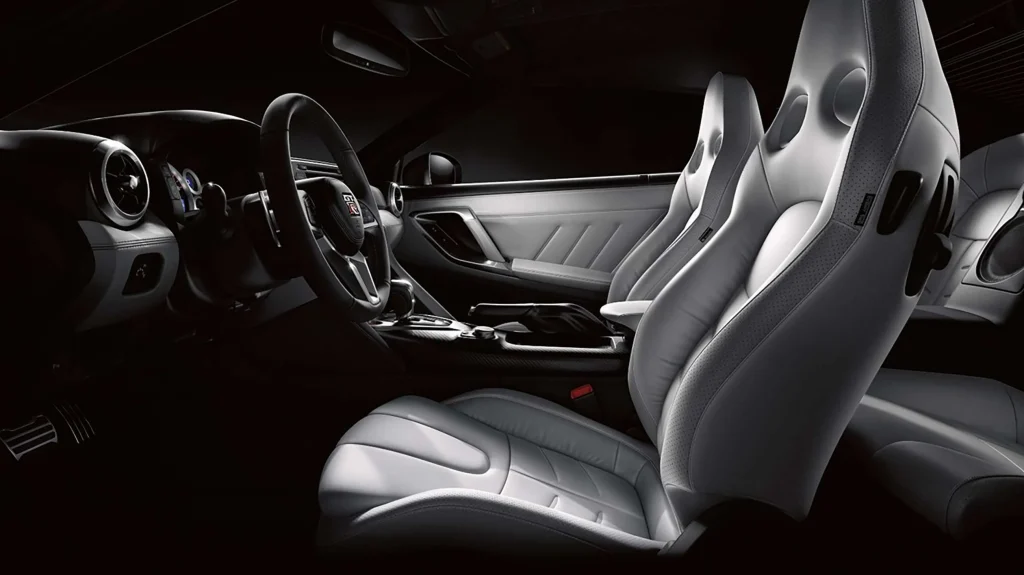
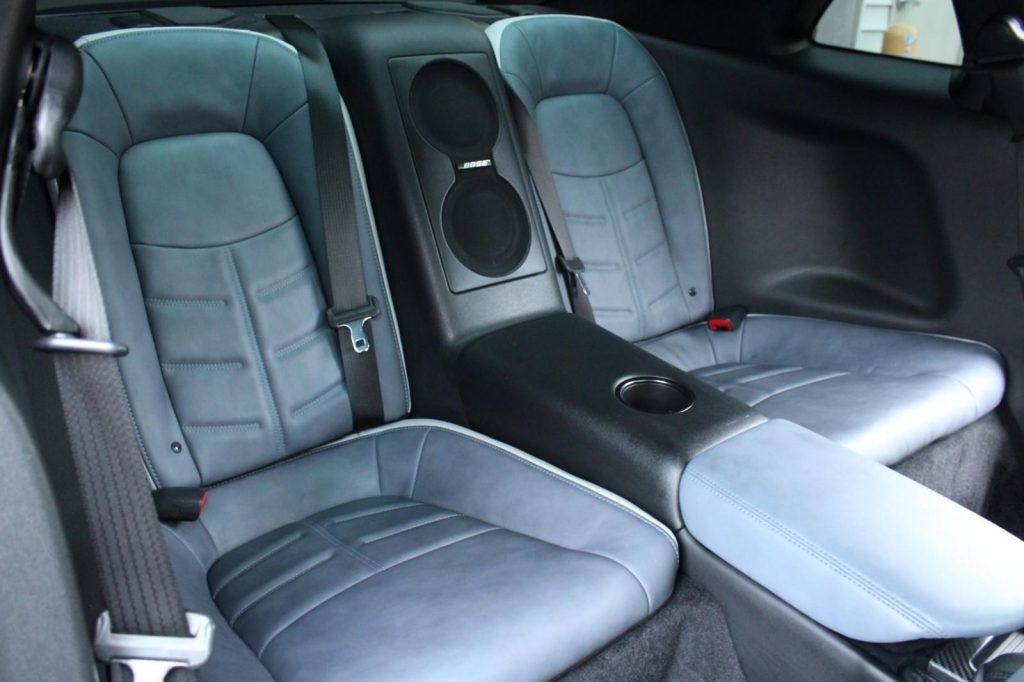
Stepping inside the GT-R reveals a cabin that balances raw performance data with surprising modern luxury. In its more recent iterations, Nissan has moved away from the utilitarian plastics of the past, opting instead for hand-selected Nappa leather and semi-aniline upholstery that wraps the dashboard in a single, seamless hide. The centerpiece of the interior is a multi-function display designed by Polyphony Digital, the same team behind the Gran Turismo video game series. This interface allows the driver to monitor everything from lateral G-forces to turbocharger boost levels in real-time, creating a bridge between the digital and physical worlds. While the firm seats and active noise cancellation remind you that this is a grand tourer, the driver-centric cockpit ensures you never forget you are at the helm of a serious weapon.
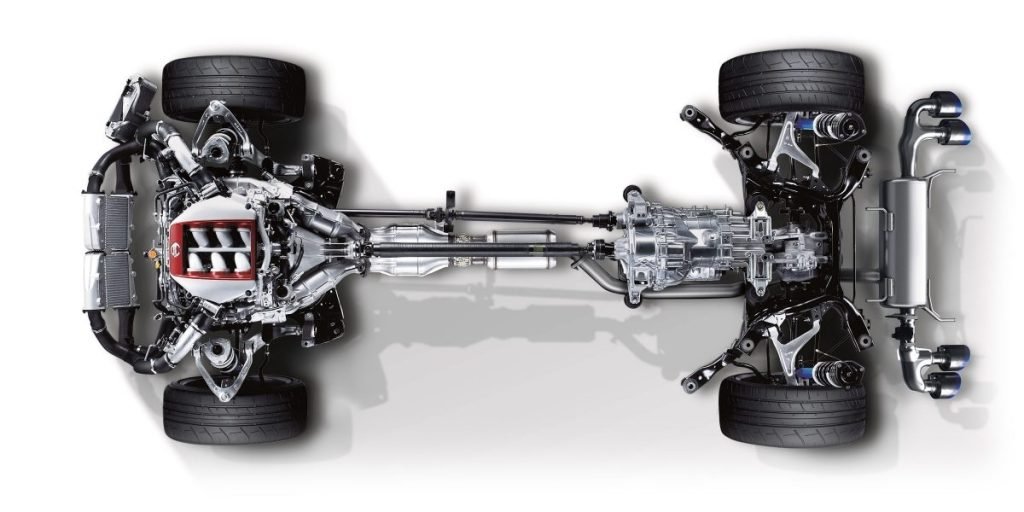
The true soul of the GT-R, however, lies beneath the hood in the form of the $VR38DETT$ engine. This 3.8-liter twin-turbo V6 is hand-assembled by a single “Takumi” master craftsman in a dust-free clean room, a level of attention usually reserved for high-end horology. This powerhouse, which produces between 565 and 600 horsepower, is mated to a sophisticated ATTESA E-TS All-Wheel-Drive system. Unlike traditional AWD setups, this system is rear-biased, sending power to the front wheels only when necessary to claw the car out of a corner. It results in a driving experience that feels almost supernatural, propelling the car from 0 to 100 km/h in a heart-stopping 2.8 seconds, regardless of whether the driver is a professional racer or an enthusiastic amateur.
In the Kenyan context, the GT-R remains an elusive and highly coveted crown jewel. Bringing one to Nairobi or Mombasa is a significant financial undertaking, largely due to Kenya’s strict age-limit laws on imports and high taxation based on engine displacement. A well-maintained 2020 model can easily command between KES 24,000,000 and 27,000,000, while a newer or high-spec NISMO version can soar well past the KES 35,000,000 mark once the KRA has collected its heavy duties. For the Kenyan owner, the GT-R is a dual-edged sword: it offers the ultimate adrenaline rush on the bypasses, yet demands a very cautious eye for the country’s notorious speed bumps and potholes. It is a car for the bold—a machine that demands respect and delivers a performance that justifies every shilling spent.
Post by Sipitali:
Car Enthusiast, Salesperson: Imports By Rigi
Leave a Reply