

A vehicle is one of the most significant investments many people make, and proper care is essential to maintaining its appearance, performance, and long-term value. While regular mechanical maintenance ensures reliable operation, consistent car care and detailing help preserve the vehicle’s exterior finish, protect interior surfaces, and enhance the overall driving experience.
Car detailing extends beyond a standard car wash. It is a comprehensive maintenance process that involves cleaning, restoring, and protecting both the interior and exterior of a vehicle. Routine detailing helps prevent premature wear, safeguards paintwork from environmental damage, and contributes to a higher resale value.
This guide outlines professional car care practices, including proper washing techniques, interior cleaning methods, paint protection options, stain removal, recommended detailing products, maintenance schedules, winter protection strategies, and common mistakes to avoid.
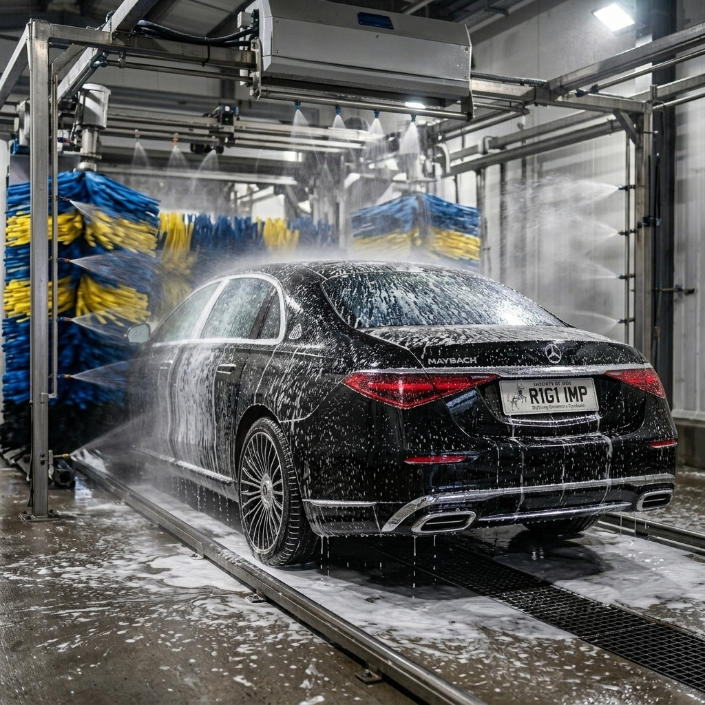
Professional Car Washing Techniques
Proper washing is the foundation of effective vehicle maintenance. Using the correct techniques and products minimizes the risk of scratches, swirl marks, and paint damage while maintaining the vehicle’s finish.
For optimal results, use a pH-balanced automotive shampoo, microfiber wash mitts, clean microfiber drying towels, and separate cleaning tools for wheels and tires. The two-bucket washing method—one bucket containing soapy water and another containing clean rinse water—helps prevent dirt from being transferred back onto the vehicle’s paint.
Always wash the vehicle from the top downward, as lower panels typically accumulate more dirt and road debris. Washing in shaded areas also helps prevent water spots and streaking caused by direct sunlight. Once the vehicle has been thoroughly cleaned, dry it immediately using microfiber towels to eliminate water spotting and protect the paint finish.
Effective Interior Cleaning Practices
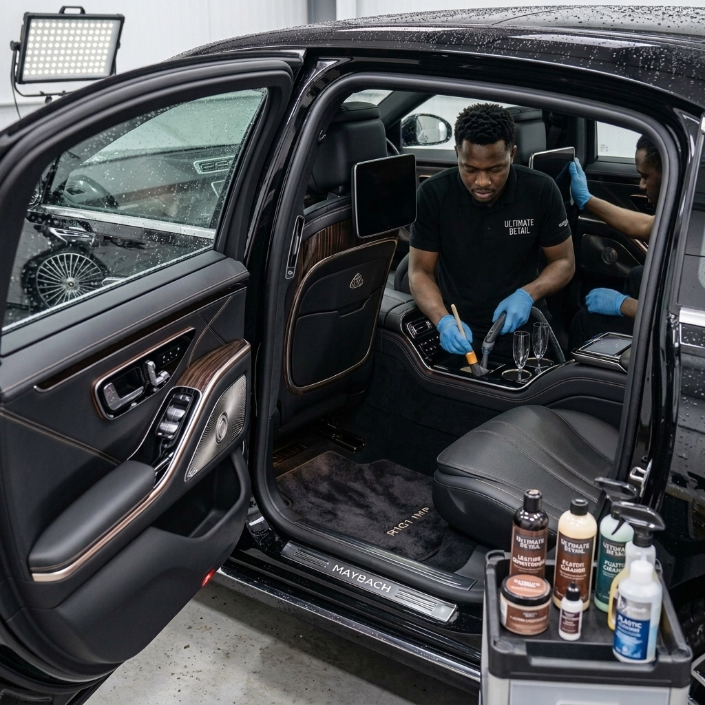
Maintaining a clean vehicle interior improves comfort, preserves materials, and contributes to a healthier cabin environment.
Begin by vacuuming carpets, seats, floor mats, and hard-to-reach areas to remove dust and debris. Dashboard surfaces, door panels, and trim should be cleaned using products specifically formulated for automotive interiors to prevent fading or discoloration.
Leather upholstery should be cleaned gently and conditioned periodically to prevent drying, cracking, and premature wear. Fabric seats require regular vacuuming and prompt stain treatment using upholstery cleaners designed for automotive materials.
Glass surfaces should be cleaned using streak-free automotive glass cleaners to maximize visibility, while persistent odors should be addressed by identifying and removing their source rather than masking them with air fresheners.
Paint Protection: Paint Protection Film vs. Ceramic Coating
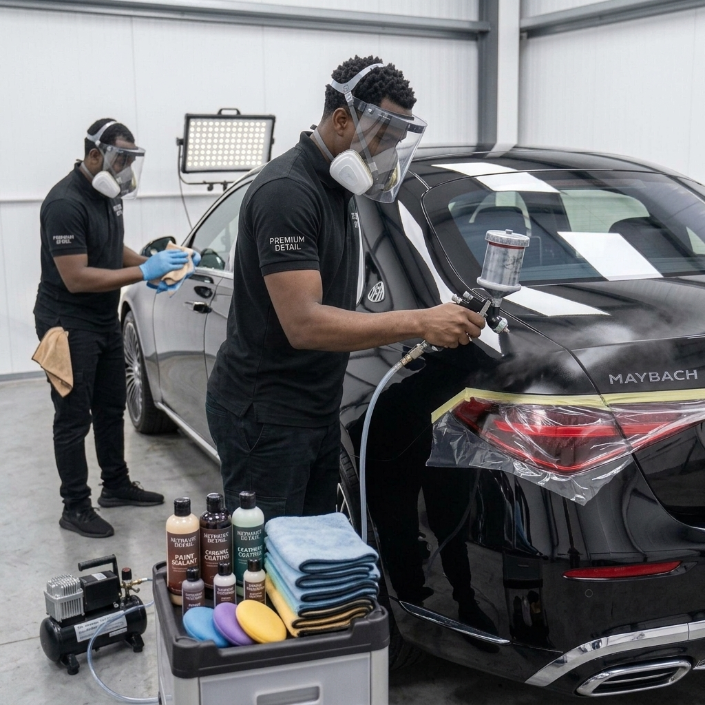
Protecting your vehicle’s paintwork is an important part of long-term maintenance. Two of the most effective solutions are Paint Protection Film (PPF) and ceramic coating.
Paint Protection Film is a transparent polyurethane layer applied directly to painted surfaces. It provides exceptional protection against rock chips, scratches, road debris, and UV exposure, making it an ideal choice for vehicles frequently driven on highways or rough roads.
Ceramic coating is a liquid polymer that chemically bonds with the vehicle’s paint, creating a durable protective layer. It enhances gloss, improves water repellence, and makes routine cleaning significantly easier. While ceramic coatings provide excellent protection against environmental contaminants and UV damage, they do not offer the same level of impact resistance as Paint Protection Film.
Vehicle owners seeking maximum protection often choose to combine both solutions, using Paint Protection Film on high-impact areas and ceramic coating across the remaining painted surfaces.
Removing Common Interior Stains
Prompt stain removal helps preserve upholstery and maintain a clean interior.
Coffee spills should be blotted immediately before applying an upholstery cleaner. Grease stains require automotive-safe degreasers, while ink marks can often be removed carefully using rubbing alcohol after testing on an inconspicuous area.
Mud should be allowed to dry before vacuuming and cleaning, while pet hair can be effectively removed using rubber brushes or gloves before vacuuming. During winter months, salt stains can typically be treated using a mixture of warm water and white vinegar followed by thorough drying.
Using the correct cleaning method for each type of stain helps prevent permanent damage to interior materials.
Essential Car Detailing Products
High-quality detailing products play an important role in achieving professional results.
A well-equipped detailing kit should include a pH-balanced car shampoo, microfiber wash mitts and towels, automotive wheel cleaner, tire dressing, interior surface cleaner, leather conditioner, streak-free glass cleaner, and a quality wax or paint sealant.
Selecting products specifically designed for automotive applications helps protect vehicle finishes while delivering superior cleaning performance.

Recommended Detailing Schedule
Maintaining a consistent detailing schedule helps preserve your vehicle throughout the year.
Weekly maintenance should include washing the exterior, vacuuming the interior, and cleaning all glass surfaces.
Monthly maintenance should focus on deeper interior cleaning, dashboard conditioning, tire dressing, and wheel cleaning.
Every three to six months, protective waxes or paint sealants should be reapplied, while leather upholstery should be conditioned as needed.
An annual professional detailing service is recommended to restore paint, address minor imperfections, and apply long-lasting protective coatings where appropriate.
Vehicles frequently exposed to harsh weather, heavy traffic, or off-road conditions may require more frequent detailing.
Common Mistakes That Damage Vehicle Paint
Many paint defects result from improper washing and maintenance practices.
Using household detergents instead of automotive shampoos removes protective waxes and sealants, leaving paint vulnerable to damage. Dirty wash mitts and sponges trap abrasive particles that create scratches and swirl marks.
Allowing water to air dry often results in mineral deposits and water spots, while wiping dust from a dry vehicle can scratch the clear coat. Additionally, bird droppings and tree sap should be removed promptly, as their acidic properties can permanently damage paint if left untreated.
Avoiding these common mistakes helps preserve the vehicle’s finish and reduces the need for costly paint correction.
Conclusion
Consistent car care and detailing are essential components of responsible vehicle ownership. By adopting professional washing techniques, maintaining a clean interior, applying appropriate paint protection, and following a structured maintenance schedule, vehicle owners can preserve both the appearance and value of their vehicles.
Regular detailing not only enhances aesthetics but also protects against environmental damage, extends the lifespan of interior and exterior surfaces, and contributes to a safer, more enjoyable driving experience. Whether performed at home or by professional detailers, proper vehicle care is a worthwhile investment that delivers lasting benefits for years to come.