
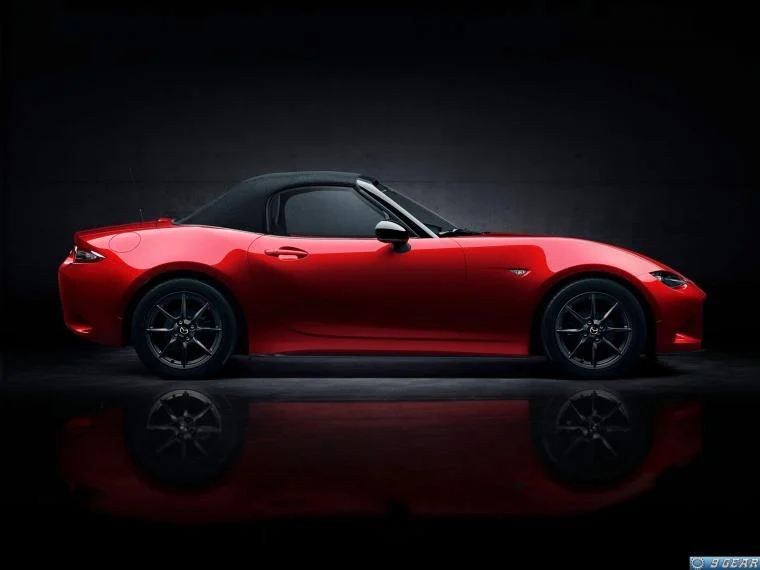
If you grew up in Nairobi traffic, you know the drill. You wake up, you brace yourself for Mombasa Road or Waiyaki Way, and somewhere between the matatus and the roadworks, you forget that driving was ever supposed to be fun. Cars, in this context, become tools. Appliances on wheels. You buy them for space, for ground clearance, for how many cousins they can carry to Naivasha over Christmas.
Then you sit in a 2020 Mazda MX-5, and it reminds you of something you’d quietly forgotten — that a car can just be about the joy of driving it.
The Design Philosophy: Less Is the Whole Point
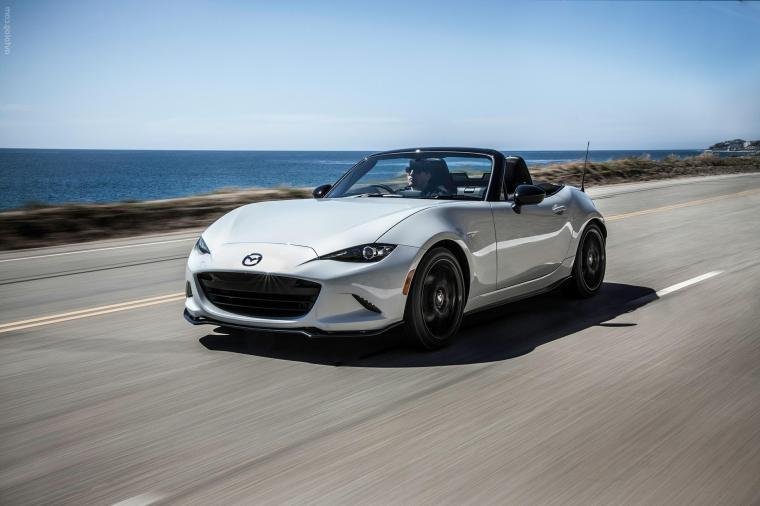
Mazda built the MX-5 on a stubborn idea called Jinba Ittai — Japanese for “horse and rider as one.” It’s less a marketing slogan and more a design constitution. Every generation of the MX-5, this fourth-generation “ND” model included, is engineered around one goal: keep it light, keep it low, keep the driver connected to the road.
This is where Mazda’s KODO — “Soul of Motion” — design language comes in. Look at the 2020 MX-5 parked outside a café in Karen or lined up at a Sunday car meet in Tigoni, and you’ll notice it doesn’t try to look aggressive or oversized, the way so many cars chasing status do. Its lines flow like a single gesture — long bonnet, short overhangs, a cabin pushed back toward the rear wheels. It’s the same design instinct behind a well-thrown spear or a cheetah mid-stride: nothing wasted, nothing added for show.
For a country where “bigger is better” often defines car culture — from the Prado to the Land Cruiser V8 — the MX-5 makes a quietly rebellious statement. It says presence doesn’t need to come from size.
Powertrains: Small Engine, Big Character
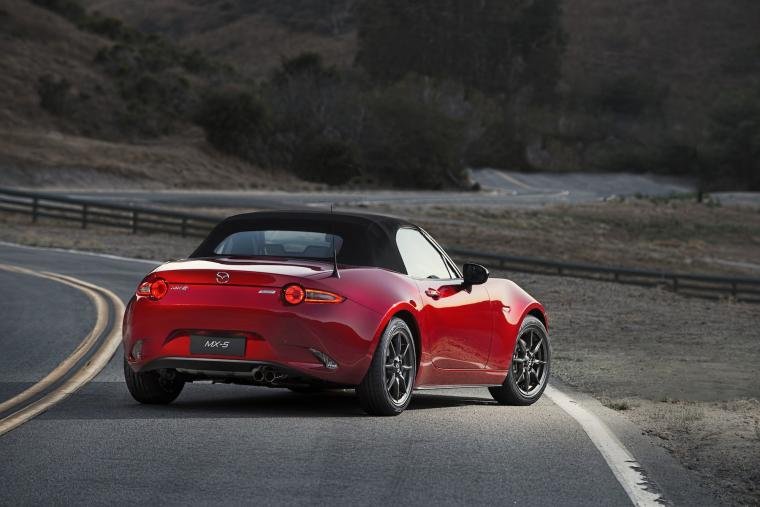
Here’s where the MX-5 continues to defy expectations. The 2020 model came with two Skyactiv-G petrol engine options — a 1.5-litre and a 2.0-litre — and neither one is chasing outright power figures the way a modified Subaru WRX in Nairobi’s car culture might.
The 1.5-litre four-cylinder produces around 130 hp, while the 2.0-litre steps up to roughly 181 hp. Neither number will win arguments at a Karura Forest car meet against a turbocharged rival. But numbers were never really the point. Because the MX-5 weighs barely over a tonne — lighter than most saloon cars on Kenyan roads — that modest power translates into genuinely sharp, eager performance. It’s the automotive equivalent of a featherweight boxer: not the biggest puncher in the room, but faster, sharper, and far more fun to watch work.
Both engines pair with a six-speed manual or automatic gearbox, though — and car enthusiasts will tell you this themselves — the manual is where the MX-5’s soul really lives. On the sweeping bends up toward Kinangop, or the quiet backroads around Naivasha, that gearbox becomes part of the conversation between you and the road.
Exterior Luxury Features: Understated, Not Underdone
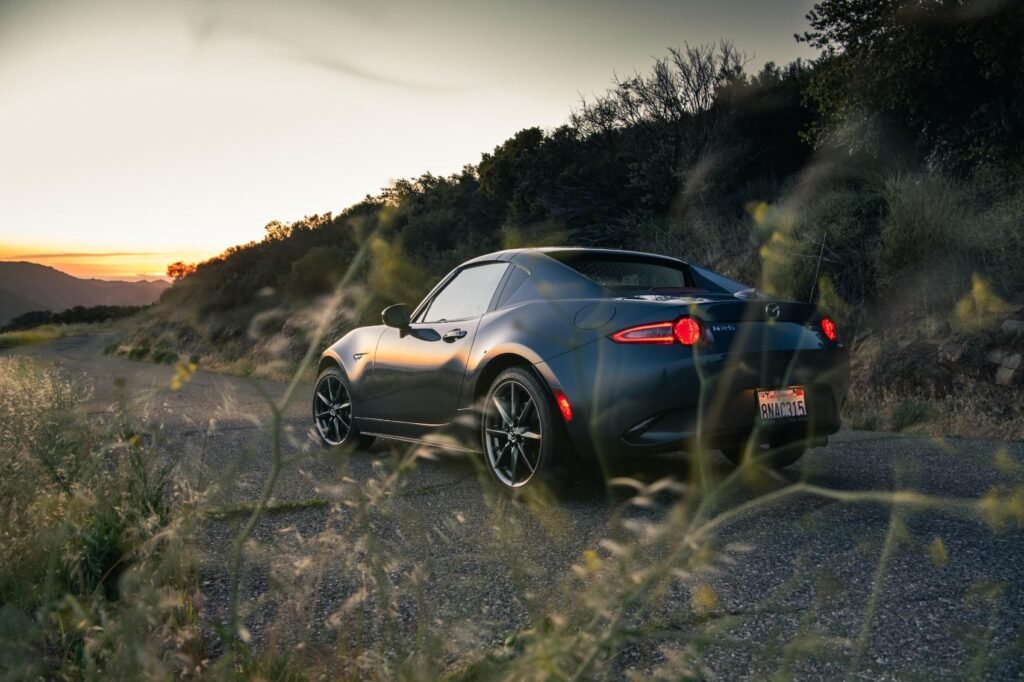
The MX-5 doesn’t shout its luxury the way a German saloon might, but the details are there for anyone paying attention. LED headlamps and taillamps come standard on higher trims, giving the car a sharp, modern face even after dark — useful on Kenya’s often poorly lit rural roads. The retractable soft-top (or the RF’s power-retractable hardtop) folds away in seconds, letting you turn a dusty afternoon on the Rift Valley escarpment into an open-air experience most SUV owners will never know.
Alloy wheels, integrated fog lamps, and a low, planted stance round out an exterior that photographs beautifully against Kenya’s dramatic backdrops — think Hell’s Gate’s red cliffs or the tea plantations rolling past Kericho. It’s a car built to be seen in scenery, not just seen in traffic.
Interior Luxury Features: Cockpit, Not Cabin
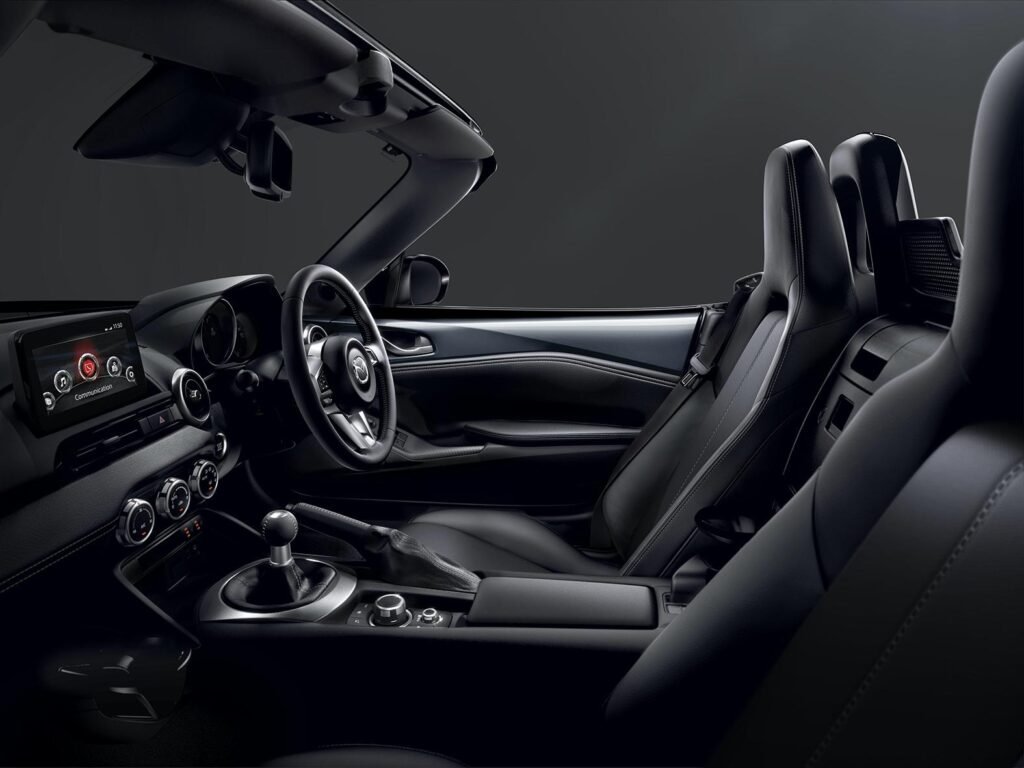
Step inside, and the MX-5 feels less like a car interior and more like a cockpit built for two. Leather-trimmed seats (on higher Grand Touring trims), heated seating options, a 7-inch infotainment touchscreen with Apple CarPlay and Android Auto, and a Bose premium sound system with headrest-mounted speakers — designed specifically so music stays crisp even with the top down and Nairobi wind rushing past your ears.
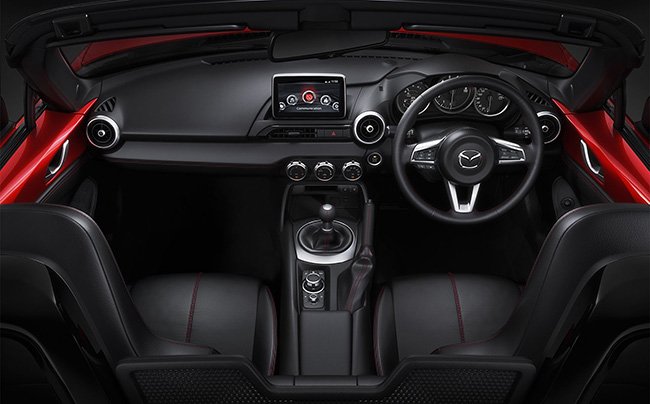
There’s something almost intimate about the layout. Everything — the gear lever, the dashboard, the controls — sits close to hand, angled toward the driver in a way that larger family SUVs simply don’t bother with. It’s not spacious. It was never meant to be. It’s meant to feel like it was tailored around you.
Pricing in Kenya and Running Costs: The Honest Numbers
The MX-5 isn’t officially sold new through Mazda Kenya’s local dealership network in meaningful volumes — most units in the country arrive as foreign-used imports, typically sourced from Japanese auctions given Kenya’s right-hand-drive requirement. Depending on grade, mileage, and trim (Sport, Club, or Grand Touring, soft-top or RF hardtop), a foreign-used 2020 Mazda MX-5 in Kenya generally lands somewhere in the KES 3.5 million to KES 3.9 million range once duty, VAT, and import levies are factored in — with cleaner, low-mileage units and the RF hardtop variant sitting toward the higher end.
As for running costs, this is genuinely one of the MX-5’s strongest arguments. With its small-displacement engines, expect fuel economy in the region of 12–15 km/l in mixed driving — a relief compared to the thirstier V6 and V8 SUVs that dominate Kenyan roads. Insurance, however, tends to sit on the higher side because it’s classified as a sports/performance vehicle, and comprehensive cover is strongly recommended given its convertible top and lower ground clearance — not ideal for Kenya’s occasionally punishing rural roads and unmarked speed bumps. Spare parts are available through Mazda-authorized dealers and independent importers, though as with any lower-volume model in Kenya, expect slightly longer wait times for specialized parts compared to a Toyota or Nissan.
The Verdict
The 2020 Mazda MX-5 isn’t trying to be practical in the way Kenyan car buyers usually demand. It won’t carry your shopping from Naivas, it won’t fit five passengers for a wedding convoy to Kisumu, and it definitely won’t out-tow a Land Cruiser on a rough murram road. But that’s not what it’s built for.
What it offers instead is something rarer on Kenyan roads: the simple, uncomplicated pleasure of driving for driving’s sake. In a car culture built around size, status, and space, the MX-5 quietly asks a different question — what if the best car is just the one that makes you smile the whole way there?
Compiled by Sipitali Shitsukane
Car Enthusiast, Vehicle Imports Consultant