
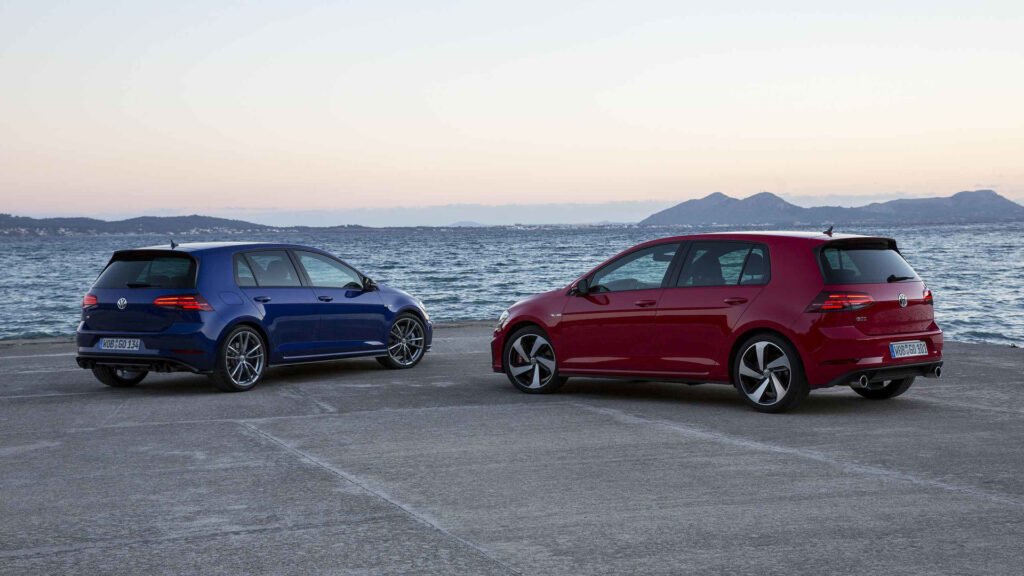
To trace the lineage of modern performance driving is to inevitably arrive at Wolfsburg. Volkswagen’s hot-hatch formula has spent nearly five decades redefining what a sports car can be, but the duel between the Golf GTI and the Golf R represents two distinct philosophies of speed. While both share the legendary EA888 2.0-liter turbocharged inline-four engine, the way they deliver their mechanical violence reveals two vastly different personalities on the tarmac.
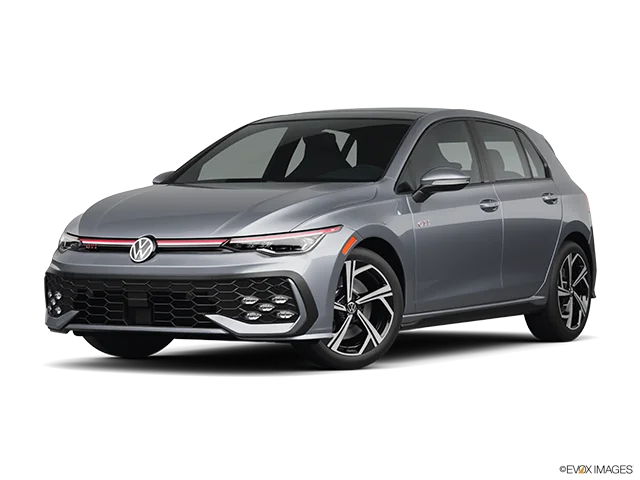
The Golf GTI remains the undisputed king of accessible agility. Channelling roughly 241 to 245 horsepower and 370 Nm of torque exclusively through its front wheels, it feels light, telepathic, and eager to rotate. The electronically controlled VAQ limited-slip differential works overtime, biting into apexes and pulling the nose through corners with a dancing, playful chassis that rewards driver involvement. It sprints from zero to 100 km/h in about 6.0 seconds, but straight-line numbers miss the point entirely. The GTI is about momentum, steering feedback, and that visceral joy of wringing out a hot hatch on a twisting road.
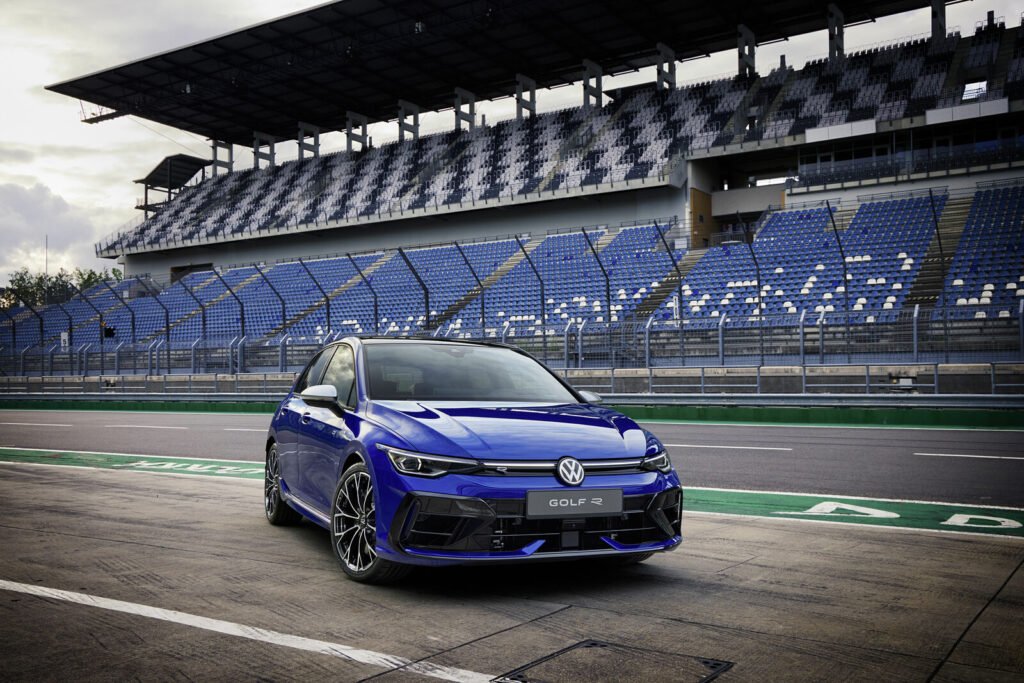
Step into the Golf R, however, and the tone shifts from playful to ballistic. Volkswagen dials the boost up on the EA888 to unleash upwards of 315 to 328 horsepower and up to 420 Nm of torque. Coupled with the 4MOTION all-wheel-drive system and a rapid-fire DSG dual-clutch transmission, the Golf R hooks into the asphalt with zero drama, catapulting off the line to 100 km/h in a staggering 4.5 seconds. Where the GTI dances around the limits of grip, the Golf R simply bends physics to its will. With rear-axle torque vectoring, it claws through corners with point-and-shoot precision, turning wet pavement or aggressive cornering into absolute non-events.
Every man needs a Golf GTI or Golf R in his driveway because it is the ultimate automotive Swiss Army knife. It obliterates the compromise between childish thrill and adult responsibility. Pulling into a high-stakes corporate parking lot, its clean German lines and understated styling project effortless sophistication—free from the obnoxious wing-and-splitter aesthetics of traditional sports cars. Yet, fold down the rear seats and it swallows luggage, camera gear, or camping equipment with ease. It is a quiet, comfortable daily cruiser on Monday morning, but with a press of the drive mode selector into Sport or Race, it transforms instantly into a supercar-revering backroad weapon.
In the Kenyan market, owning one of these German icons requires a clear understanding of the financial landscape. A clean, foreign-used Mk7.5 Golf GTI (2019–2020) currently commands between KES 3.5 million and KES 3.8 million, while a newer Mk8 model shifts the goalposts to KES 4.5 million – KES 4.8 million. The flagship Golf R commands a premium for its performance hardware; expect to spend KES 4.8 million to KES 5.5 million for an Mk7.5, while an Mk8 Golf R comfortably ranges between KES 6m million and KES 6.5 million depending on mileage and landed spec.
Living with a high-strung German powertrain on Kenyan roads demands meticulous stewardship. Fuel quality is non-negotiable: the EA888’s direct-injection system and high turbo boost pressure require continuous feeding of 95-octane premium unleaded (such as Shell V-Power). Attempting to save money with regular 91-octane petrol risks severe engine knocking, carbon buildup, and damaged fuel injectors over time.
Furthermore, preventative maintenance is paramount. The dual-clutch DSG transmission demands a fluid and filter flush every 40,000 kilometers without exception; neglecting this leads to mechatronic unit failures that can easily cost upwards of KES 200,000 to replace locally. Owners must also monitor the plastic thermostat and water pump housing, an EA888 weak point prone to developing hairline leaks around the 80,000-kilometer mark (a KES 45,000 fix). Factor in a set of performance tires like Michelin Pilot Sport 4s to handle local potholes on low-profile rims—running around KES 100,000 a set—and the running costs reflect the car’s engineering sophistication.
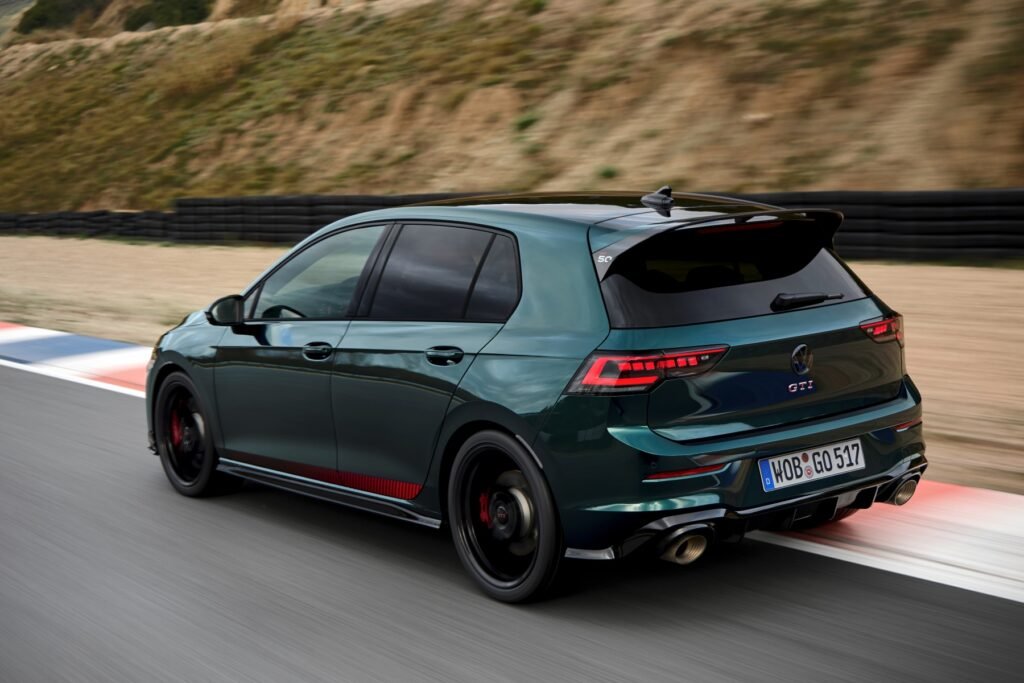
Ultimately, the choice comes down to driver identity. Choose the GTI if you value classic, lightweight driver engagement and a playful front end; choose the Golf R if you demand brutal, rain-or-shine speed and all-wheel-drive dominance. Either way, you are buying into the peak of practical performance engineering.
Compiled by Sipitali Shitsukane
Automotive Enthusiast, Vehicle Imports Consultant